THE PLUS THEATRE
Business, cultura e formazione incontrano la pietra naturale
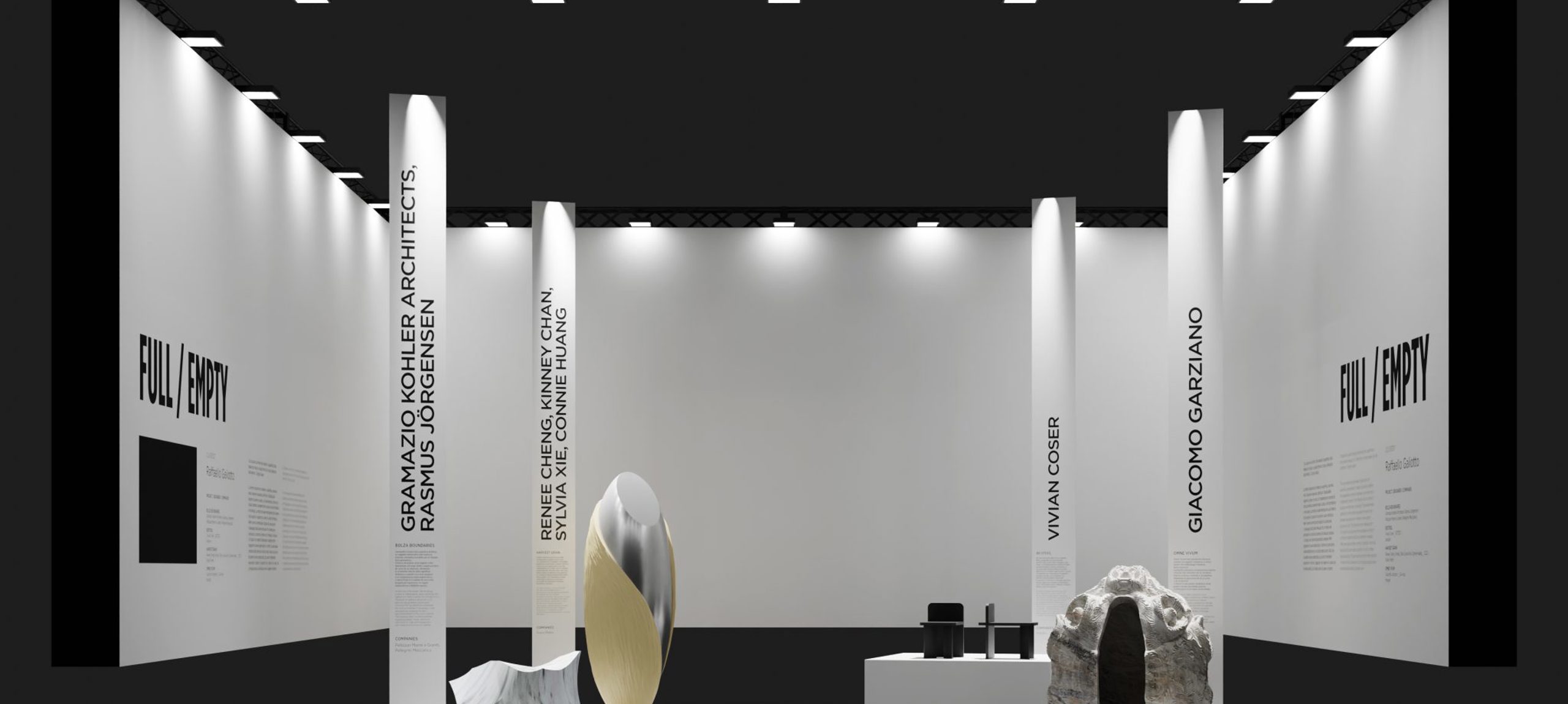
FULL / EMPTY LITHIC EXPERIMENTS
Hall 10
Cura: Raffaello Galiotto
Design: a selection of international designers
“La scultura è un’arte che levando il superfluo dalla materia la riduce a quella forma di corpo disegnata dall’artefice.” Giorgio Vasari
La stretta relazione tra materia e superfluo, espressa nella citazione vasariana, definisce l’indissolubile legame tra pieno e vuoto, un fondamentale concetto di natura antitetica presente nella scultura, nell’architettura e nel design. La mostra di sperimentazione sulla materia litica esplora il rapporto tra pieno e vuoto nell’epoca delle nuove strumentazioni digitali di lavorazione. Il passaggio dall’azione manuale di un tempo alle lavorazioni a controllo numerico di fresatura abrasiva o di taglio con utensili diamantati e waterjet offre oggigiorno nuove opportunità in termini di precisione, riproducibilità tecnica e utilizzo dello scarto. Alla luce di queste nuove potenzialità, gli autori interpellati esplorano in liberta il rapporto tra il pieno e il vuoto con la produzione di un’inedita serie di opere in marmo.
Bolza Boundaries — Gramazio Kohler Architects, Rasmus Jörgensen — Pellizzari Marmi e Graniti, Pellegrini Meccanica
BoStool — Vivian Coser _ SETTE7 — Antolini
HarvestGrain — Renee Cheng, Kinney Chan, Sylvia Xie, Connie Huang _ CCD — Grassi Pietre
OmneVivum — Giacomo Garziano _ GG-loop — Margraf
BOLZA BOUNDARIES
Designer
Gramazio Kohler Architects,
Rasmus Jörgensen (Switzerland)
Azienda
Pellizzari Marmi e Graniti, Pellegrini Meccanica
Materiale
Bianco Carrara
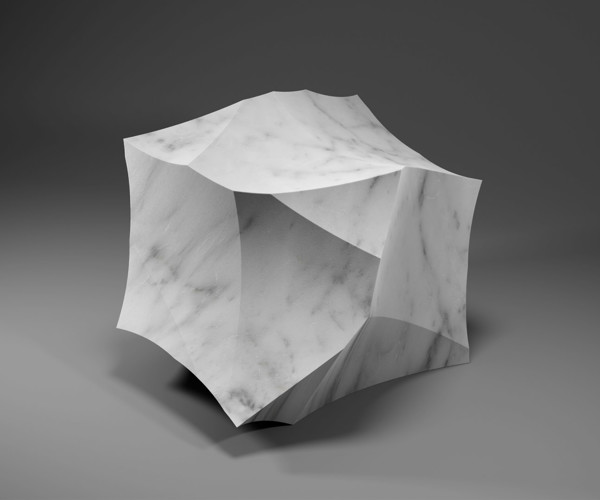
Il progetto si basa sulla superficie di Bolza, un oggetto matematico che mostra la massima simmetria possibile per un doppio toro. Rappresentare la sua struttura e la curvatura iperbolica come un oggetto fisico è fondamentalmente impossibile. Questa impossibilità è ulteriormente accentuata dalla scelta del marmo come ultima “pièce de résistance”. Il marmo viene tagliato lungo dodici coppie parallele di curve da sei direzioni, sfruttando le simmetrie interne della superficie di Bolza per avvicinarsi alla sua essenza e conferire all’oggetto la sua forma unica e caratteristica. La leggera curvatura dei tagli interni compete con un’ipotetica tassellatura ideale del blocco, generando spostamenti complessi e inaspettati negli spigoli e negli angoli, rivelando l’interno del blocco di marmo, la sua storia materica intrinseca, le sue inclusioni, imperfezioni e difetti. L’oggetto risultante oscilla tra l’espressione di una scelta progettuale, i limiti delle regole, dei materiali e dei sistemi produttivi
GRAMAZIO JÖRGENSEN KOHLER
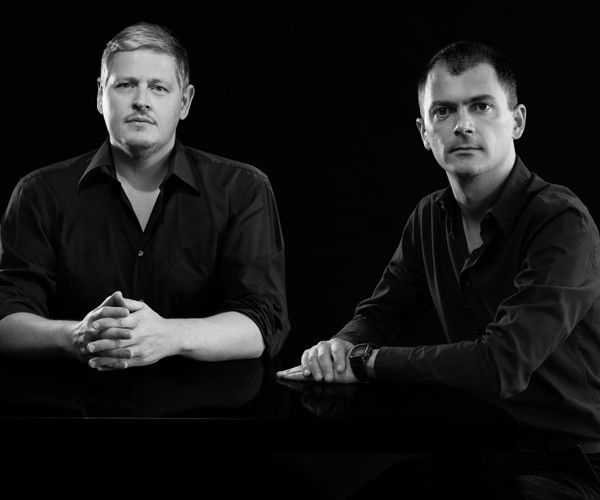
More than 20 years after their last collaboration, Fabio Gramazio, Rasmus Joergensen, and Matthias Kohler reunite for the project Bolza Boundaries. Gramazio and Kohler have, through their projects and research, shaped the field of architecture during the last decades. Their main design interests and research focus lie in the interplay of advanced computational design and robotic fabrication processes. Rasmus Joergensen has founded and developed software products for several tech startups. His most recent innovative work in the area of geometric spatial tilings and automated form generation, sparked the current collaboration with Fabio Gramazio and Matthias Kohler.
BO STOOL
Designer
Vivian Coser SETTE7 (Brasil)
Azienda
Antolini
Materiale
Noirblanc by Antolini
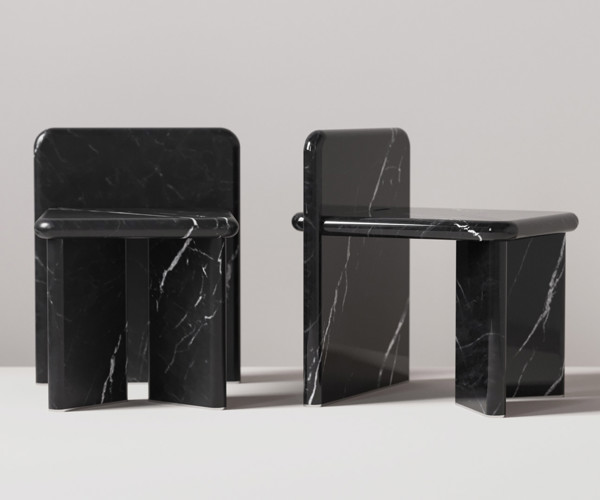
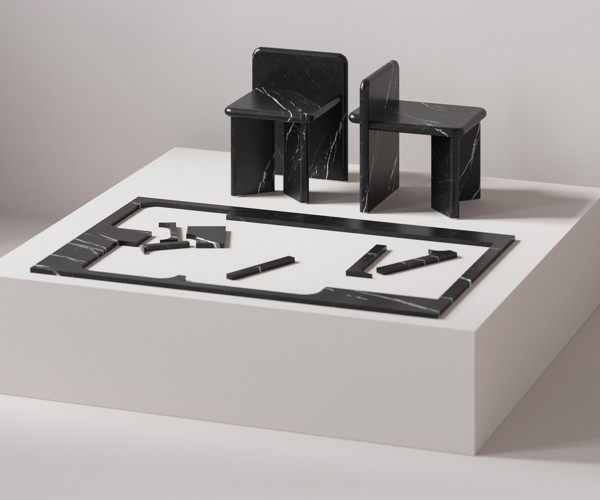
Bo trae ispirazione dall’essenza dell’iconico sgabello SESC, progettato da Lina Bo Bardi nel 1977 per il centro SESC Pompeia a San Paolo, e viene arricchito da un tocco contemporaneo e distintivo da parte di Vivian Coser. Questo pezzo ne rappresenta una reinterpretazione moderna, fondendo armoniosamente l’estetica minimalista e la funzionalità dell’architettura brutalista, attingendo alla versatilità degli incastri in pietra. Il design di Bo presenta linee sobrie e geometriche, con una struttura robusta e imponente, caratteristiche emblematiche dello stile brutalista. Ogni elemento dello sgabello è scolpito in pietra naturale e progettato per adattarsi perfettamente, eliminando la necessità di strumenti o fissaggi aggiuntivi. Questo approccio consente un montaggio e uno smontaggio rapidi, rendendo l’oggetto adatto a spazi temporanei. L’uso della pietra naturale si allinea con l’etica del design sostenibile, impiegando un materiale naturale che richiede una lavorazione minima.

VIVIAN COSER
Founded in 2015 by sisters Vivian and Erika Coser,Sette7 is a brand where artisanal tradition harmoniouslyintertwines with technology, guided by meticulouscuration that results in the timeless essence of design.Vivian’s contemporary style is a synthesis of eclecticinfluences. Kinetic art, Italian rationalism, the exuberanceof Burle Marx’s gardens, and the architectural innovationof Oscar Niemeyer blend seamlessly in each createdpiece. For Sette7, design is a link between tradition andthe future, a celebration of the eternal. Manual production, combined with state-of-the-arttechnology, is the essence of our process. Each pieceis an expression of the richness and uniqueness of thespace it inhabits, adding aesthetic and emotional valueto its atmosphere. Our mission is to create furniture thattranscends time, providing a lasting experience of beautyand functionality. Our passion for Brazilian raw materials is evident in everydetail of our material curation, highlighting the finestmarbles, quartz, and crystals, the result of careful selectionand years of immersion in the world of ornamental rocks. Each material is chosen not only for its beauty but alsofor its durability and timelessness. Naturally noble, theybring sophistication and elegance to our pieces whilealso carrying the geological history and authenticity ofBrazilian land and the natural wonders that surround it.
HARVEST GRAIN
Designer
Renee Cheng, Kinney Chan, Sylvia Xie, Connie Huang CCD Cheng Chung Design (China)
Azienda
Grassi Pietre
Materiale
Pietra Bianca di Vicenza qualità Bianco Avorio by Grassi Pietre
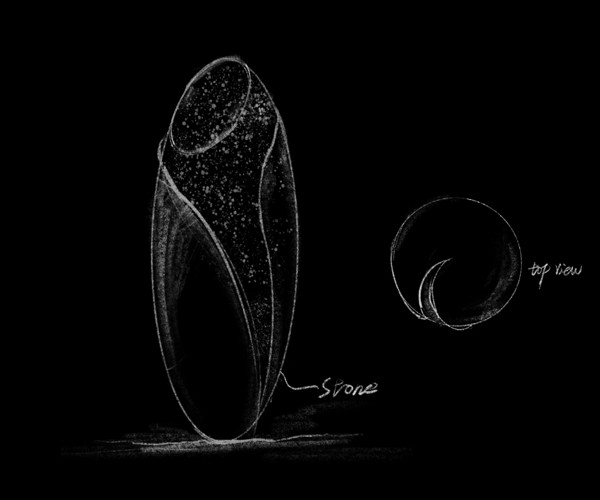
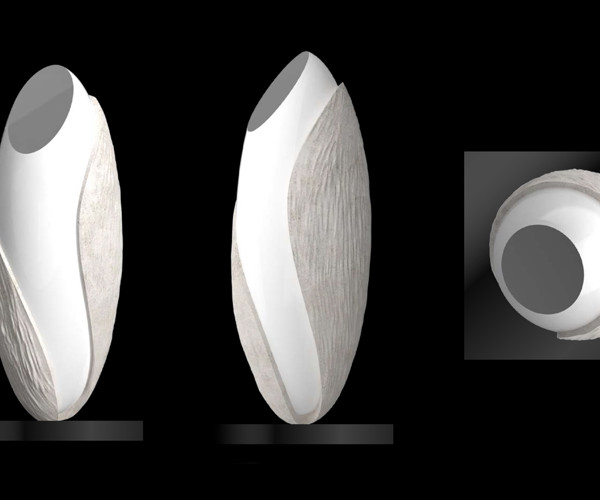
Nella creazione artistica, “pieno” può riferirsi alla pienezza o alla completezza, mentre “vuoto” si riferisce allo spazio bianco o non riempito, che sono concetti opposti. Tuttavia, il vuoto non è veramente “vuoto”, ma può anche contenere tutto, diventando così “pieno”. L’opera esplora quanto più possibile la relazione tra oggetti e spazi vuoti, e la relazione tra il tangibile e l’intangibile. Ispirazione concettuale: il simbolo del Riso. Il chicco di riso rappresenta il raccolto, l’abbondanza e la vitalità, ed è un simbolo universalmente utilizzato nelle culture per il duro lavoro, la speranza e la prosperità. Connessione tra natura e umanità: la scultura combina elementi della natura (riso e pietra) con l’intelligenza umana (l’arte della scultura) per esprimere il concetto di coesistenza armoniosa tra l’uomo e la natura. Combinando la purezza della natura con l’ingegno umano, questa scultura in pietra e bronzo a forma di chicco di riso è sia esteticamente bella che ricca di significato culturale e simbolico. Attraverso l’abile design dei materiali, della forma e della presentazione, può diventare un’opera d’arte di grande impatto sia in ambienti interni che esterni, trasmettendo un messaggio positivo di abbondanza, speranza e vitalità.




RENEE CHENG
Renee graduated from Parsons School of Design with a bachelor’s degree and obtained her master’s degree from the University of Southern California. In 2022, she was honored the Hurun Under 30 Entrepreneurial Pioneer. Her international education background and broad global perspective have shaped her unique insights, driving the integration and development of technology, art, and design of Cheng Chung Design Group. She is committed to infusing digital technology into the design industry, creating an intelligent design ecosystem to make design more effortless. With a keen perception of current fashion trends, popular elements, and artistic tendencies, she focuses on resource allocation and construction in the art field, striving to bring artistic creativity and design aesthetics into living spaces and promote the cross-disciplinary fusion of art and design.
KINNEY CHAN
Mr. Kinney Chan graduated from De Montfort University in the UK with a degree in Interior Design and holds a Bachelor of Arts. He has over 30 years of experience in interior design and project management. Mr. Chan has worked for renowned design companies in Manchester, UK, such as Company Designer Limited, and in the United States with Dale Keller & Associates, participating in numerous large-scale international interior design projects. He has also served as the president of the Hong Kong Interior Design Association, a director of the Hong Kong Design Centre, and an advisor to the Hong Kong Trade Development Council (HKTDC). His works span hotels, bars, restaurants, residential homes, commercial shops, and corporate offices, earning numerous international awards. These accolades include the A’ Design Award from Italy, the German iF Communication Design Award, the JCD Design Award Silver Prize from Japan, the Interior Design Gold Key Award from the USA, the Best of Year Award by Interior Design magazine, the Hong Kong Top Ten Outstanding Designers, and the Asia Pacific Interior Design Awards Grand Prize, establishing his influence globally.
SYLVIA XIE
Sylvia with creativity and art as its sustainable pursuit, advocates the integration of local culture, characteristics, customs and space environment, brings two-way interaction between space and people through artistic and perceptual perspectives, and integrates tradition and modernity through design language. Collision with the West, the combination reproduces the optimal solution of the design.
CONNIE HUANG
Graduated from the University of Exeter in the UK, Connie has a rich professional background and international forward-looking vision.
In 2019, she became the co-founder of Raritag together with Renee Cheng, aiming to promote the smart transformation and upgrading of the interior design industry and make design more efficient. In 2023, the Raritag team won the first prize of the “Guangdong Engineering Survey and Design Industry Association Science and Technology Award” for its smart design generation system Transfusion, assisting the interior design industry to break through content productivity tasks, achieve high cost efficiency, and provide new insights for the future development of the industry. With her smart design management concept, Connie and the Raritag team jointly created the leading digital platform IDEAFUSION, which provides targeted solutions to a series of difficulties in design projects and innovates and efficient collaborative working models.
OMNE VIVUM
Designer
Giacomo Garziano GG-loop (Netherland)
Azienda
Margraf
Materiale
Fior di Pesco Carnico by Margraf
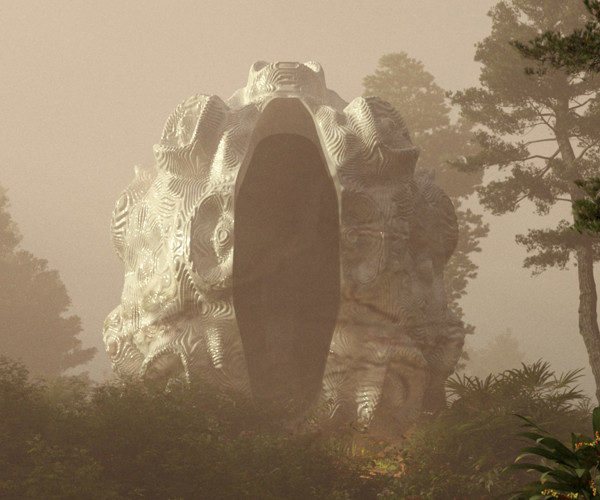
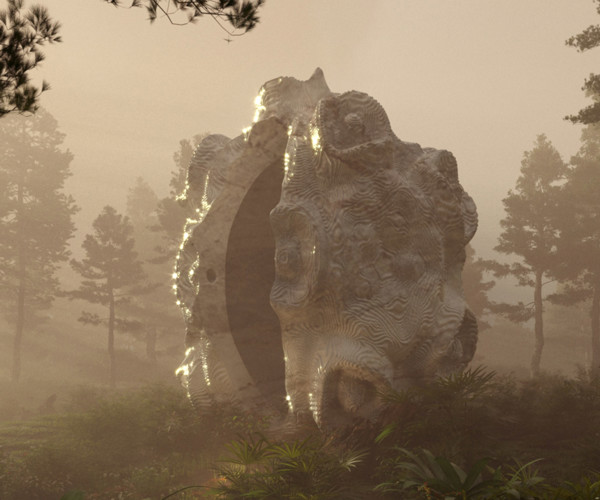
Omne Vivum trae ispirazione dall’uovo cosmico un oggetto misterioso e senza tempo che simboleggia l’essenza della creazione. Il progetto presenta una protezione esterna intricata che contrasta con la curvatura interna continua, morbida e accogliente, riflettendo le due estetiche di un uovo o di un bozzolo. L’interno è uno spazio meditativo dove potersi ritirare dal mondo esterno e immergersi in un regno senza tempo. Questa opera crea un santuario per l’introspezione, simboleggiando l’essenza universale della vita e il ruolo dell’uovo cosmico come fonte di creazione e connessione.

GIACOMO GARZIANO
Established in 2014, GG-loop believes that design is not simply about creating functional objects and spaces. Instead, design should tell a story, taking its user on a journey. GG-loop tackles design challenges with this in mind, articulating a biophilic vision for projects that is at once future-forward, organic, regenerative and refined. With studio in Amsterdam and Milan, design outcomes are embedded in a recurrent back story with an emphasis on objects and spaces that envelop the user. GG-loop also harnesses the history and craftsmanship within a country yet offers a global perspective in terms of forms and trends. The ‘loop’ to which the studio’s name refers comes from the studio’s iterative process of inquiry into a project or brief, to explore an underlying design idea. GG-loop’s realised projects include Freebooter (2019) and The Seed of Time (2015). The studio won several awards such as the Frame Award (NL), the WAF Award (UK), and the Best of Year 2019 Award (NY). GG-loop was founded by Giacomo Garziano, a graduate of Facolta’ di Architettura di Firenze (2008). His eclectic approach creates multi- sensory experiences, his objects becoming an organic extension of the user, lifting the boundaries between the human and its surroundings.