THE PLUS THEATRE
Business, culture and training meet natural stone
VIAGGIO AL CENTRO DELLA TAVOLA
Hall 10
Curator and author: Raffaello Galiotto
In front of an empty table, we are commonly inclined to place an object at its centre. A reassuring gesture, guided by our innate sense of order and balance, is carried out to highlight the surface's ideal point and determine the peripheral area for use.
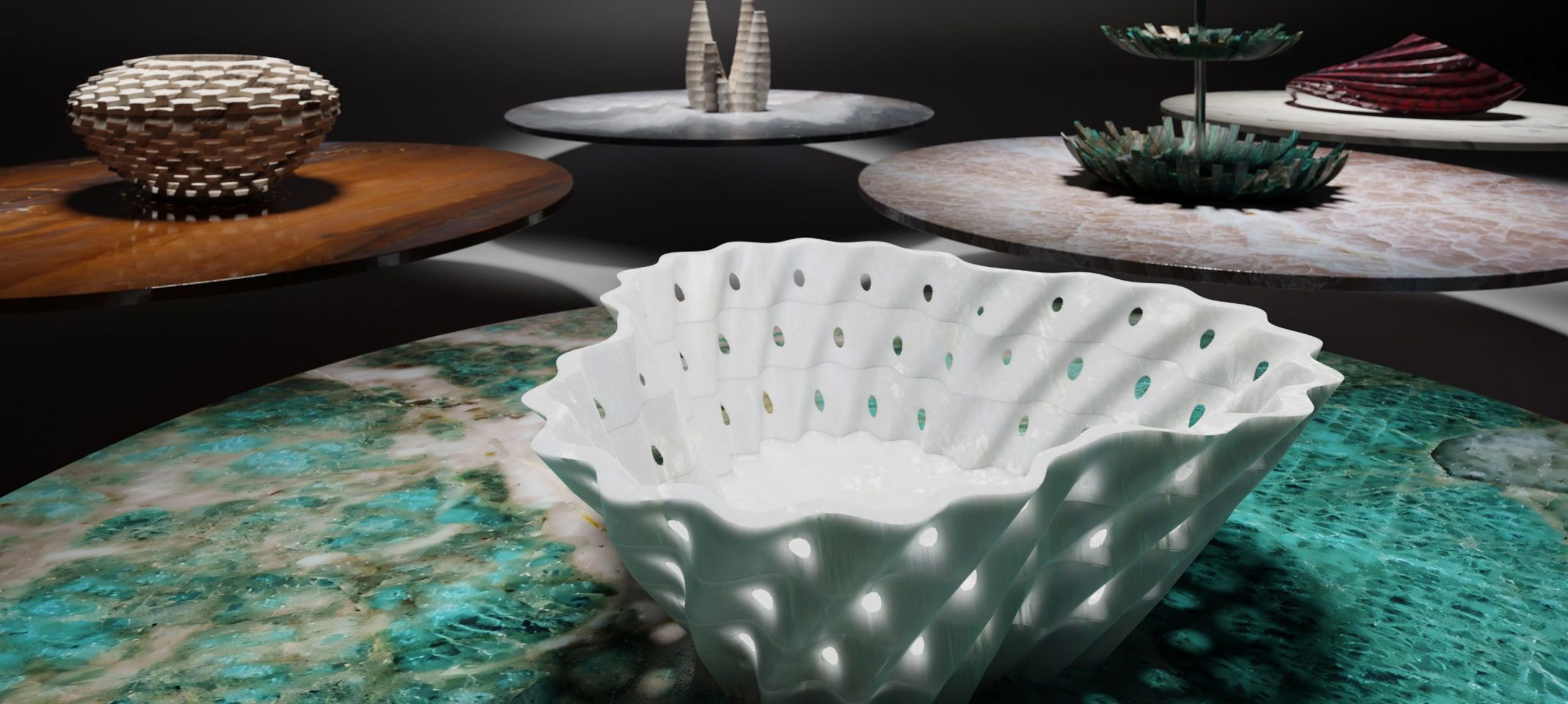
From this inherent need, the concept of a centerpiece has developed over time: an object usually of particular value, either in craftsmanship or material, serving decorative and functional purposes. The installation “Journey to the Center of the Table” aims to be a colourful and fascinating composition of tables in natural stone, consisting of a support surface made from a slab and a centerpiece finely crafted using the most advanced numerical technologies. An extraordinary journey into marble, discovering various coloured lithotypes and their specific characteristics, visible in two-dimensional slabs and the three-dimensional version of a design object.
CANESTRO
Company
Salesiani “San Zeno”
Professional Training School
Marble Art and Automation Sector
Sant’Ambrogio di Valpolicella (VR)
Materials
Palissandro by Gruppo Tosco Marmi
Bronzite by Decolores
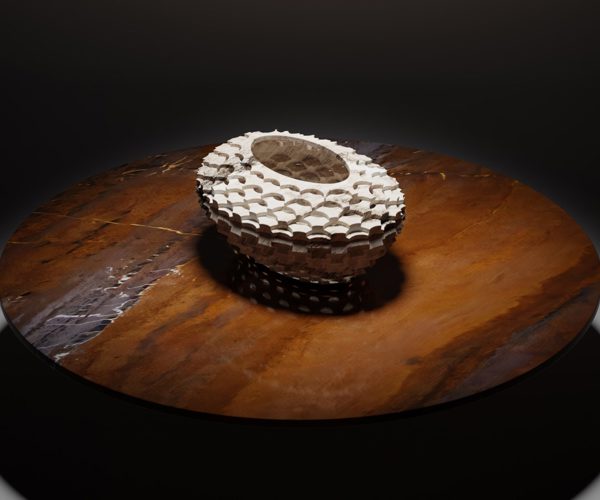
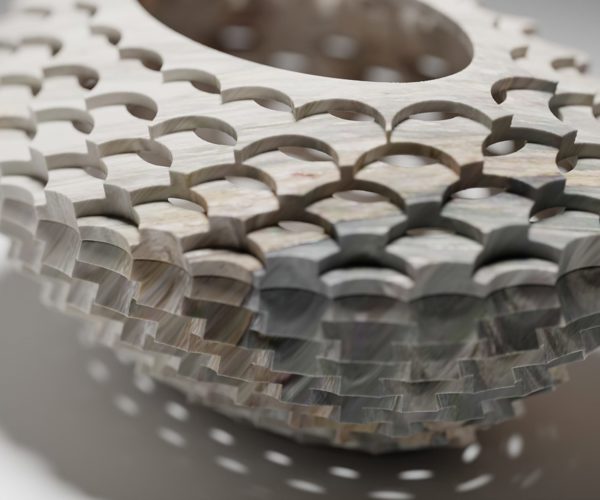
The elliptical container, with a base and lid, is characterized by the porosity of the perforated walls made by opposing and offset five-axis processing. The lid has a large opening that allows visibility of the interior as well as an easy grip.
CORNUCOPIA
Company
Budri/Taglio
Materials
Breccia Capraia by G.M.C.
Rouge de Roi
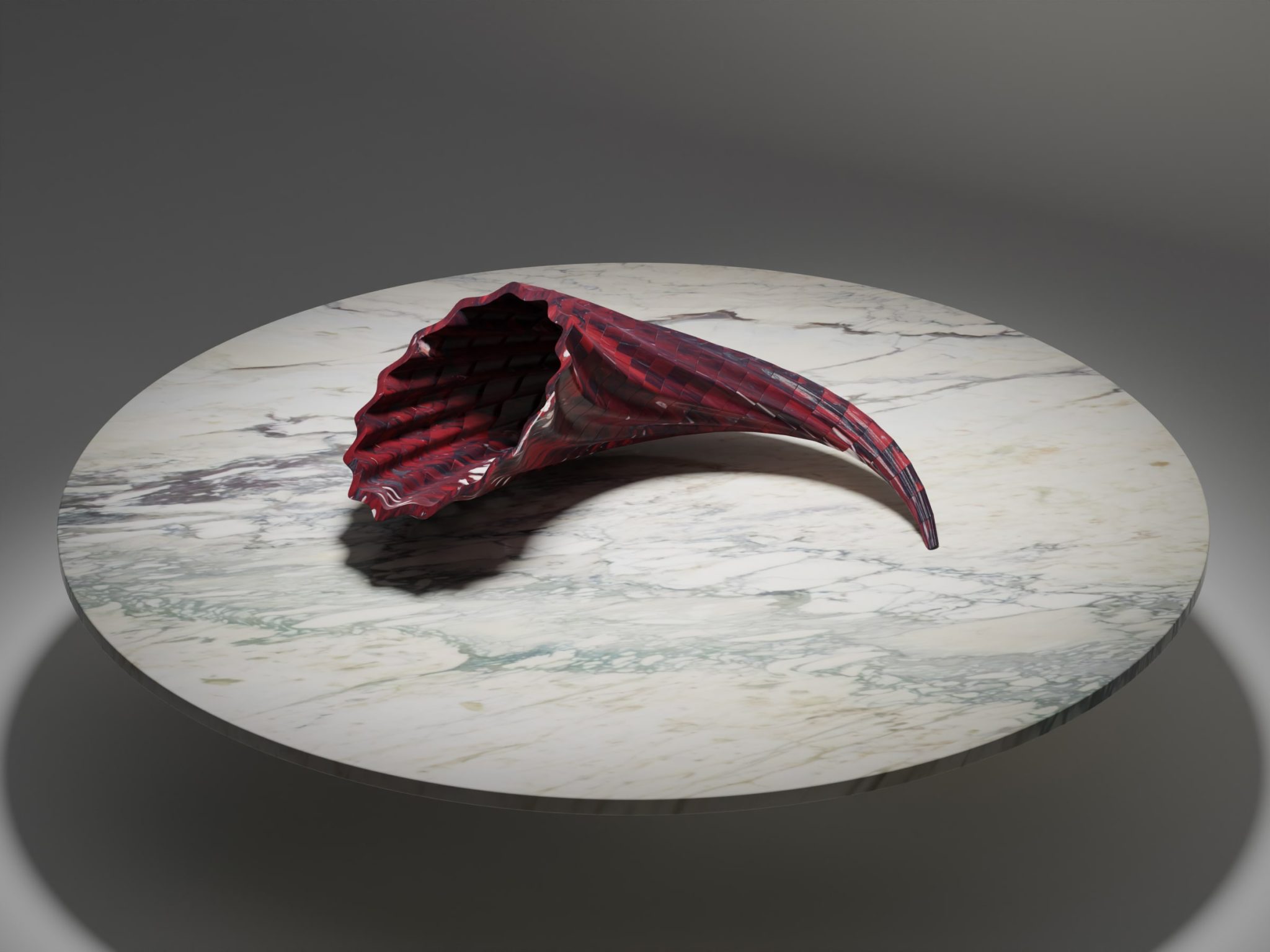
The ancient horn of plenty – a symbol of prosperity – was produced by water jet cutting with concentric rings. The overlapping rings and their surface continuity give rise to the particular helical, hollow and tapered shape.
CULMO
Company
Gmm
Materials
Palissandro by Gruppo Tosco Marmi
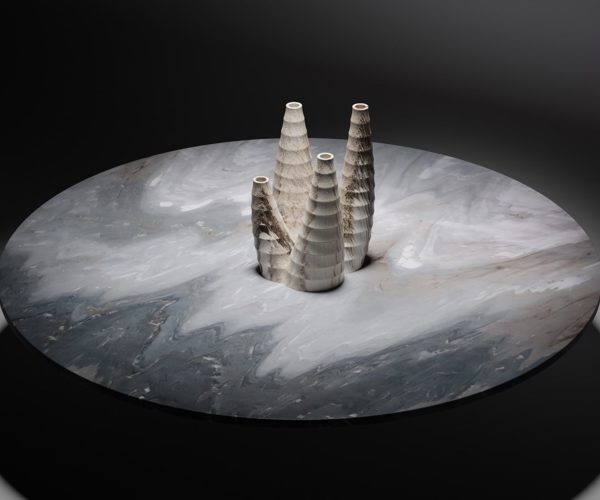
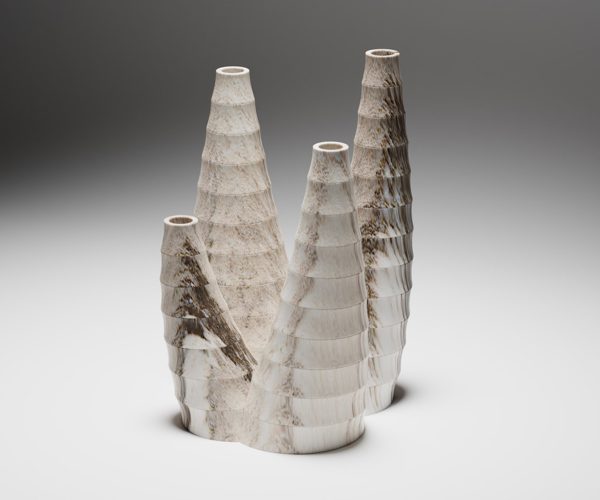
Taking inspiration from the knotted stems of grasses, this quadruple candelabra was exclusively worked from a flat slab using water jet cutting technology. The horizontal grooves on the perimeter surfaces of the individual overlapping elements were made by slanting the cuts along their circular path.
DENTELLO
Company
Prussiani Engineering, ZM Technologies
Material
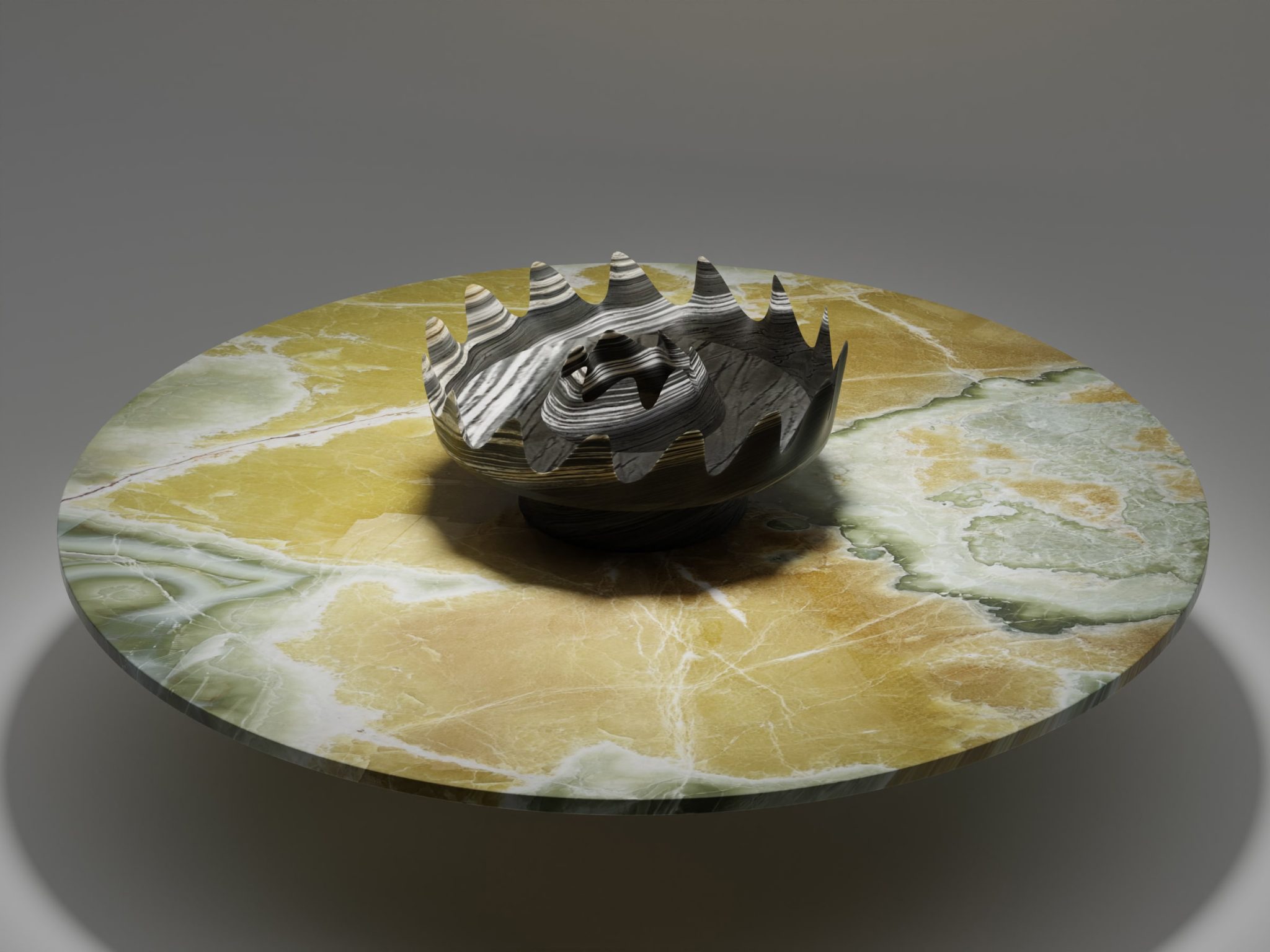
Calacatta Midnight by A&G 23
Onice Verde by A&G 23
The serrated elements and conical base of this centrepiece were generated from a single, solid piece of marble by a concentric water jet cutting process. The undulating surfaces and the serrated profile of the crowns are the logical outcome of consecutive crossed cuts.
EQUISETO
Company
Emmedue by Industrie Montanari
Kramer Steinmetzbetrieb
Nicolai Diamant
DDX
Materials
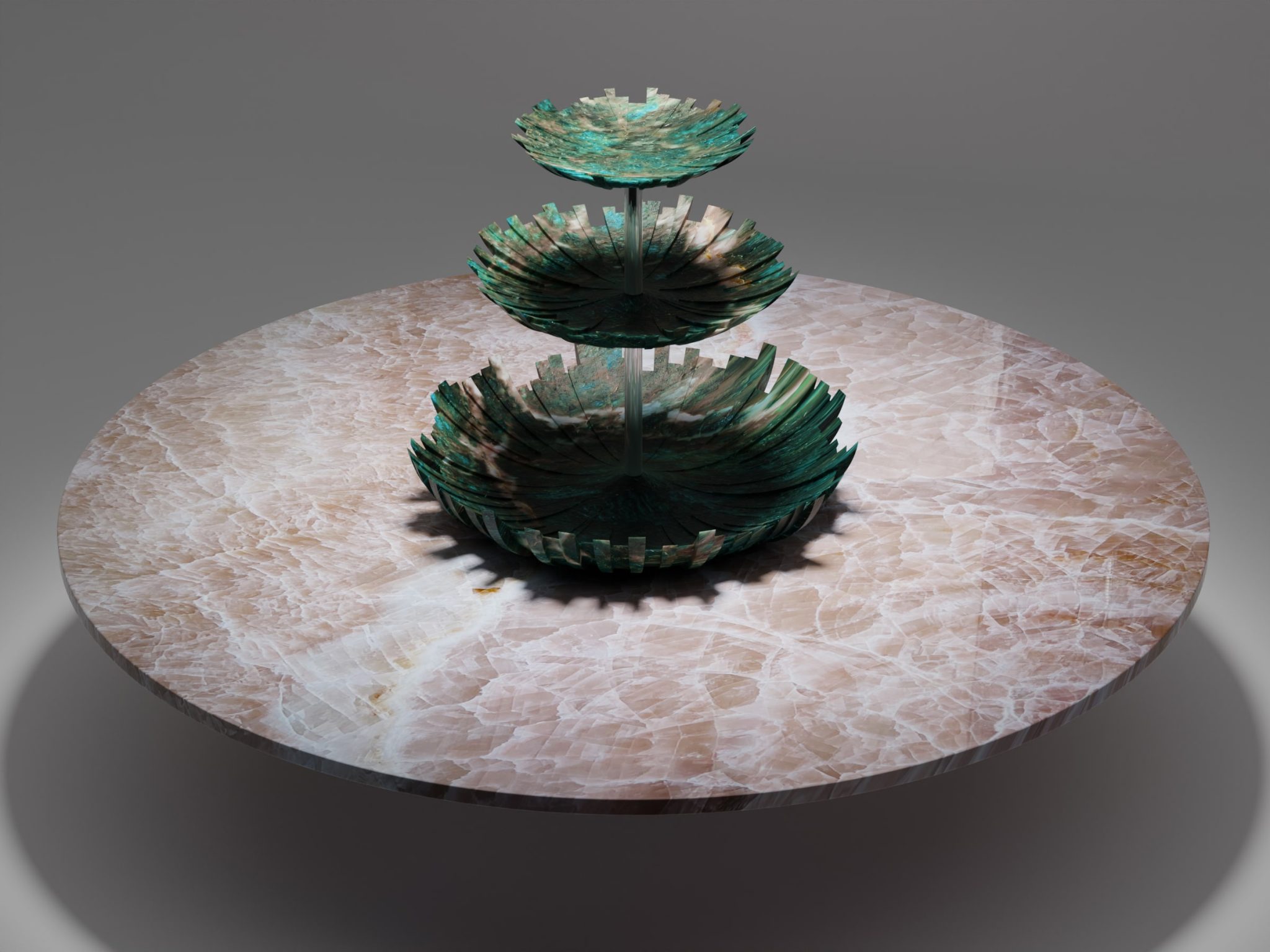
Amazzonite by Antolini
Onice Rosa Gioiello by A&G 23
The three circular tops were produced by disc processing on a five-axis machining centre. The inner side was generated by variable disc penetration on the Z axis while the outer side involved repeated side-by-side movements over several curved paths at various depths.
LOBATO
Company
Budri/Taglio
Materials
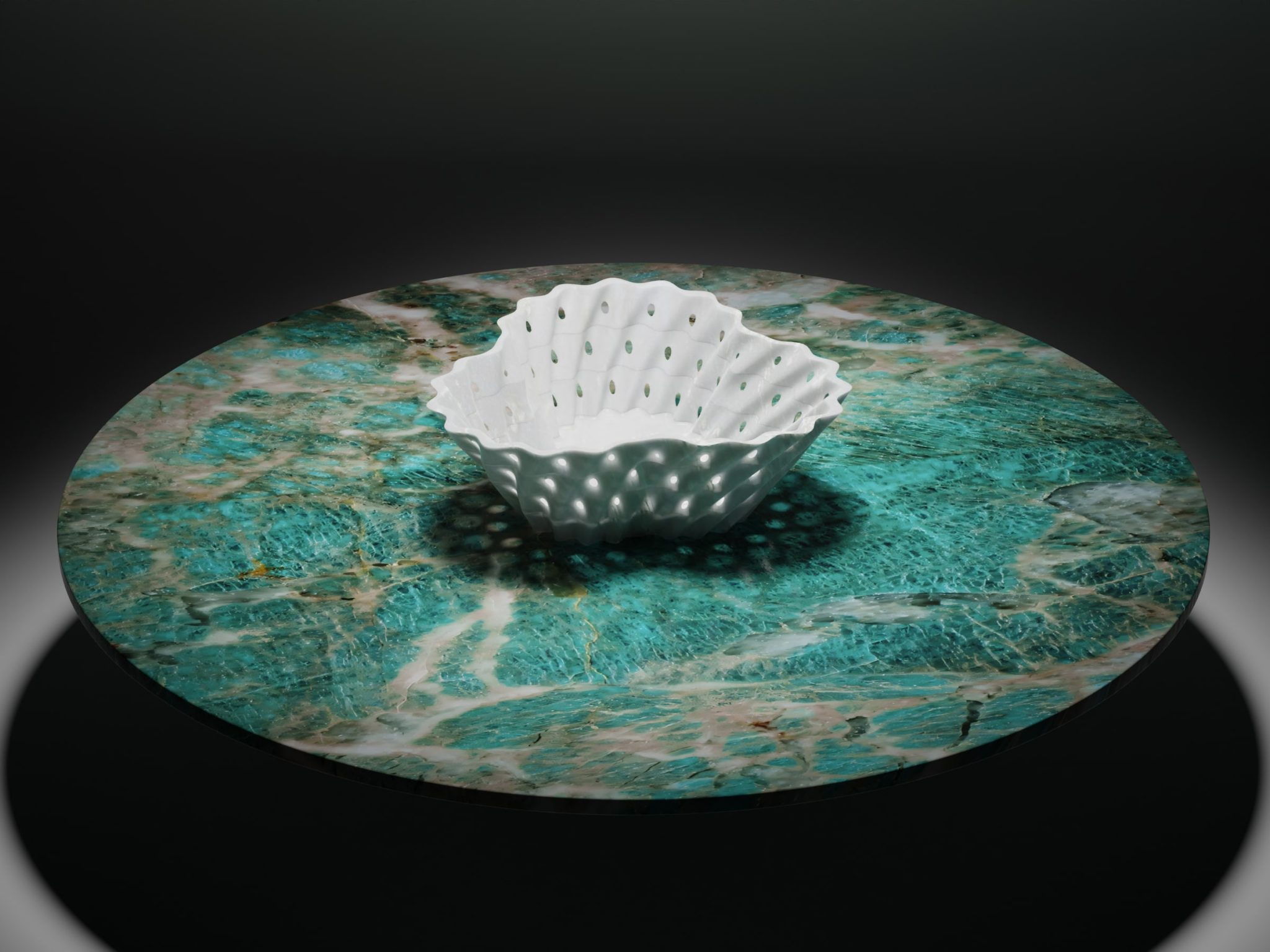
Bianco Namibia
Amazzonite by Antolini
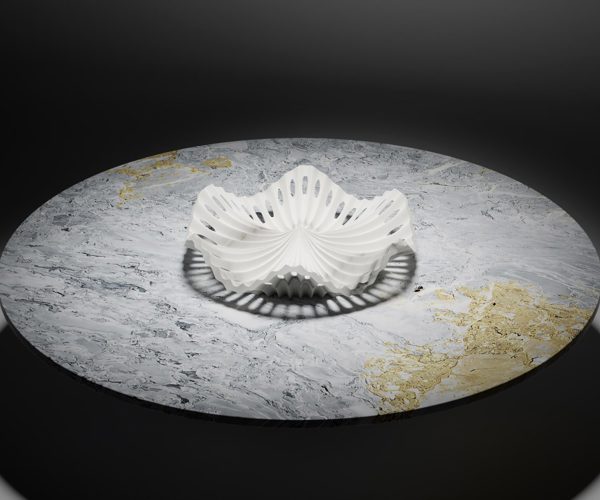
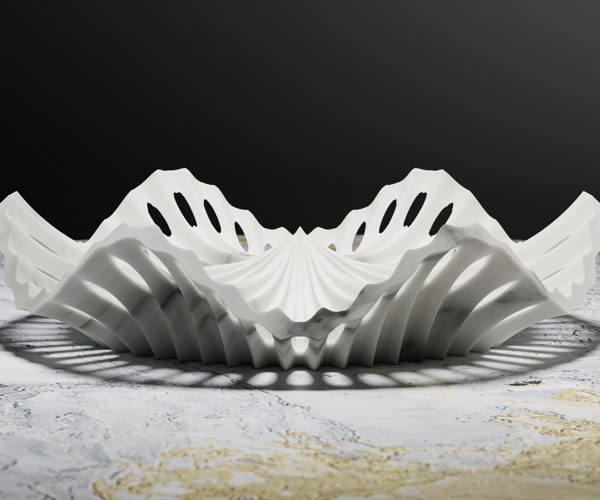
The perforated and grooved container involves overlapping three lobed rings processed by water jet cutting technology. The precise interweaving of the five-axis slanted cutting paths allowed the simultaneous creation of the undulating surface and the perforations.
RETICOLO
Company
Omag
Materials
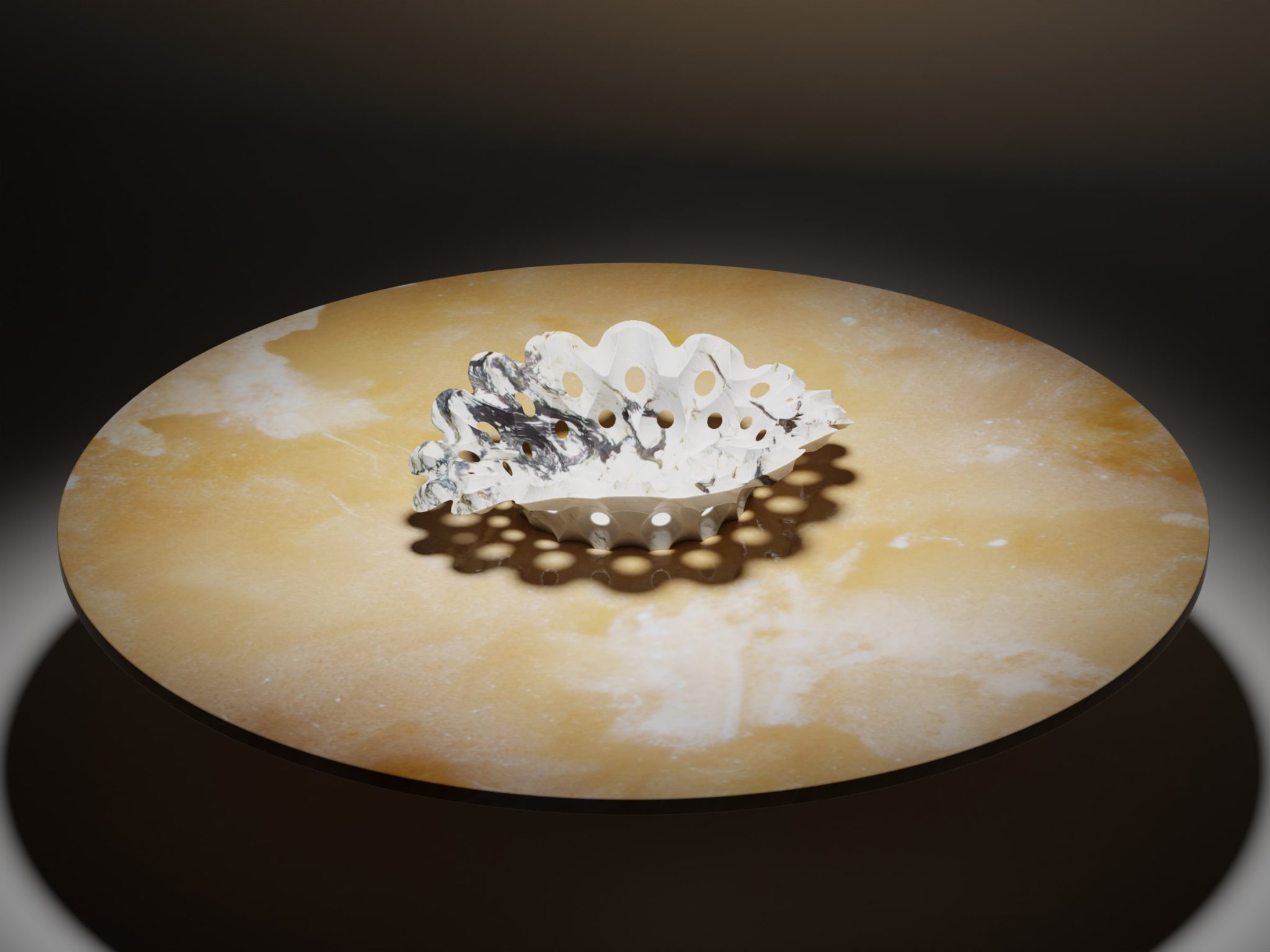
Breccia Capraia by G.M.C.
Onice Miele by C. & C. Marmi
The centrepiece’s elongated and perforated shape was developed by counter-poised interweaving of precise milling paths. The high precision semi-spherical tool, driven by five-axis control, produces not only the shape of the bowl but also give a fine hone to the resulting surface.
STIGMA
Company
Henraux
DDX
Materials
Bianco Altissimo by Henraux
Versilys by Henraux
The sinuous shape of this centrepiece was inspired by the radial symmetry of the stigma of flowers. Its complex shape was achieved by disc machining operations along two opposing, individual tool paths in brushing mode.