THE PLUS THEATRE
Business, culture and training meet natural stone
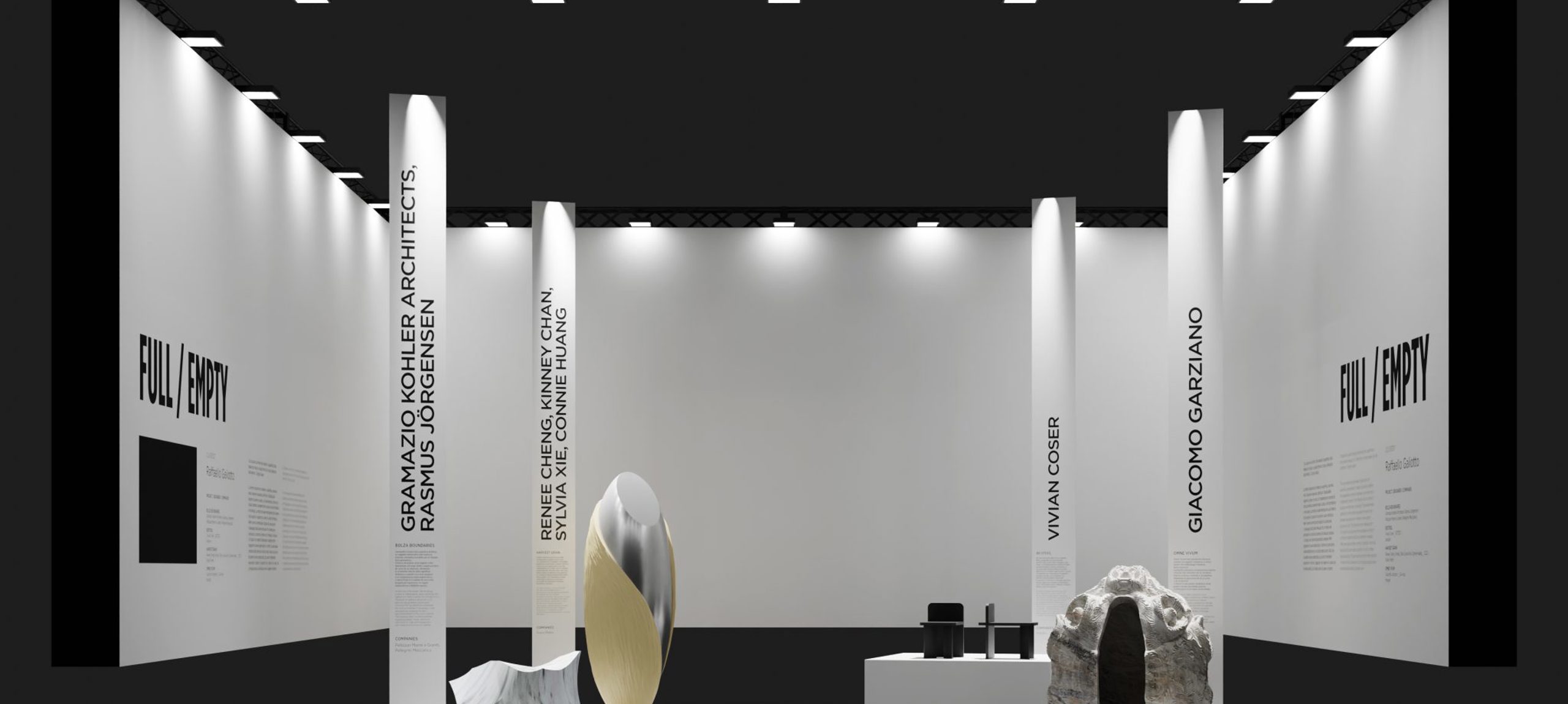
FULL / EMPTY LITHIC EXPERIMENTS
Hall 10
Curator: Raffaello Galiotto
Design: a selection of international designers
"Sculpture is an art that, by removing the superfluous from matter, reduces it to that form of body drawn by the craftsman." Giorgio Vasari
The close relationship between matter and the superfluous, expressed in Vasari’s quotation, defines the inseparable connection between solid and void, a fundamental concept of antithetical nature present in sculpture, architecture, and design. The experimental exhibition on lithic matter explores the relationship between solid and void in the era of new digital processing tools. The transition from manual action in the past to computer-controlled abrasive milling or cutting with diamond tools and waterjets nowadays offers new opportunities in terms of precision, technical reproducibility, and waste utilization. In light of these new possibilities, the participating authors freely explore the relationship between solid and void by producing an unprecedented series of marble works.
Bolza Boundaries — Gramazio Kohler Architects, Rasmus Jörgensen — Pellizzari Marmi e Graniti, Pellegrini Meccanica
BoStool — Vivian Coser _ SETTE7 — Antolini
HarvestGrain — Renee Cheng, Kinney Chan, Sylvia Xie, Connie Huang _ CCD — Grassi Pietre
OmneVivum — Giacomo Garziano _ GG-loop — Margraf
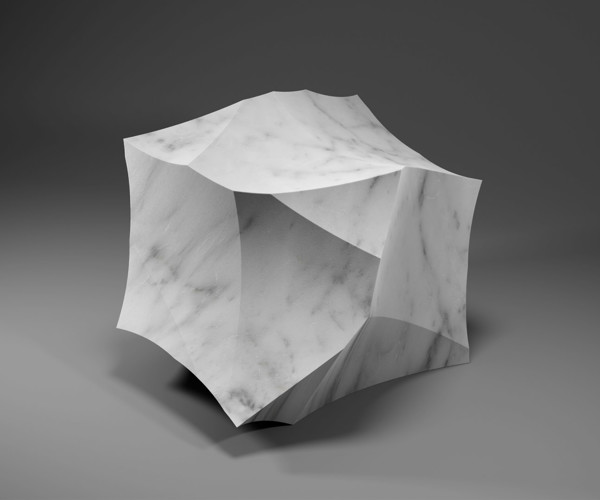
BOLZA BOUNDARIES
Designer
Gramazio Kohler Architects,
Rasmus Jörgensen (Switzerland)
Azienda
Pellizzari Marmi e Graniti, Pellegrini Meccanica
Materiale
Bianco Carrara
At the core of the project lies the Bolza surface, a mathematical object exhibiting the highest symmetry possible for a double torus. Representing its higher-dimensional structure and hyperbolic curvature as a physical object is fundamentally impossible. This impossibility is even exacerbated by the choice of marble as ultimate “pièce de résistance”. The marble is sliced along twelve parallel pairs of curves from six directions, leveraging the inner symmetries of the Bolza surface to close in on its essence and give the object its unique and characteristic shape. The gentle curvature of the inward cuts competes with an assumed ideal tessellation of the block, generating complex and unexpected shifts in edges and corners, and exposing more of the marble block’s interior, its inherent material history, its inclusions, imperfections and defects. The resulting object oscillates between expressing design choice, deliberate submission to rules, and engagement with material and production realities.
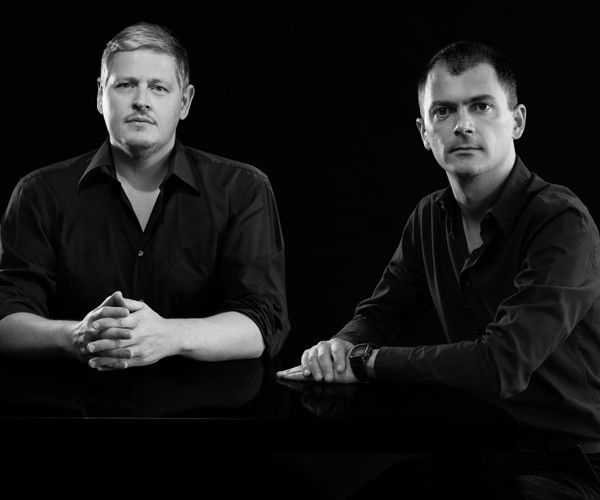
GRAMAZIO JÖRGENSEN KOHLER
More than 20 years after their last collaboration, Fabio Gramazio, Rasmus Joergensen, and Matthias Kohler reunite for the project Bolza Boundaries. Gramazio and Kohler have, through their projects and research, shaped the field of architecture during the last decades. Their main design interests and research focus lie in the interplay of advanced computational design and robotic fabrication processes. Rasmus Joergensen has founded and developed software products for several tech startups. His most recent innovative work in the area of geometric spatial tilings and automated form generation, sparked the current collaboration with Fabio Gramazio and Matthias Kohler.
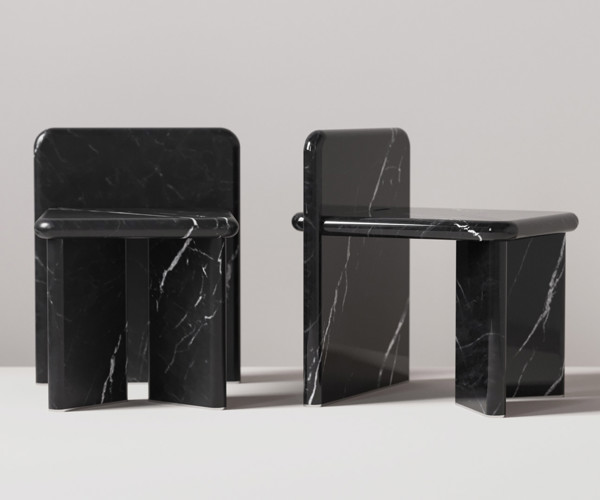
BO STOOL
Designer
Vivian Coser SETTE7 (Brasil)
Company
Antolini
Material
Noirblanc by Antolini
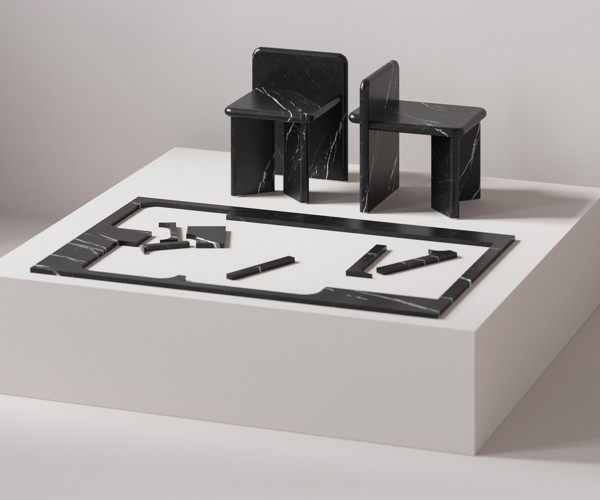
Bo draws inspiration from the essence of the iconic SESC stool, designed by Lina Bo Bardi in 1977 for the SESC Pompeia center in São Paulo, and is infused with a contemporary and distinctive touch by Vivian Coser. This piece embodies a modern reinterpretation, seamlessly blending the minimalist aesthetic and functionality of brutalist architecture, drawing upon the versatility of stone fittings. The Bo’s design showcases sober and geometric lines, with a sturdy and imposing structure, emblematic features of the brutalist style. Each element of the stool is sculpted from natural stone and designed to fit precisely, eliminating the need for additional tools or fasteners. This approach allows for swift assembly and disassembly, making it suitable for temporary spaces. The use of natural stone aligns with the ethics of sustainable design, by employing a natural material that requires minimal processing.

VIVIAN COSER
Founded in 2015 by sisters Vivian and Erika Coser,Sette7 is a brand where artisanal tradition harmoniouslyintertwines with technology, guided by meticulouscuration that results in the timeless essence of design.Vivian’s contemporary style is a synthesis of eclecticinfluences. Kinetic art, Italian rationalism, the exuberanceof Burle Marx’s gardens, and the architectural innovationof Oscar Niemeyer blend seamlessly in each createdpiece. For Sette7, design is a link between tradition andthe future, a celebration of the eternal. Manual production, combined with state-of-the-arttechnology, is the essence of our process. Each pieceis an expression of the richness and uniqueness of thespace it inhabits, adding aesthetic and emotional valueto its atmosphere. Our mission is to create furniture thattranscends time, providing a lasting experience of beautyand functionality. Our passion for Brazilian raw materials is evident in everydetail of our material curation, highlighting the finestmarbles, quartz, and crystals, the result of careful selectionand years of immersion in the world of ornamental rocks. Each material is chosen not only for its beauty but alsofor its durability and timelessness. Naturally noble, theybring sophistication and elegance to our pieces whilealso carrying the geological history and authenticity ofBrazilian land and the natural wonders that surround it.
HARVEST GRAIN
Designer
Renee Cheng, Kinney Chan, Sylvia Xie, Connie Huang CCD Cheng Chung Design (China)
Company
Grassi Pietre
Material
Pietra Bianca di Vicenza qualità Bianco Avorio by Grassi Pietre
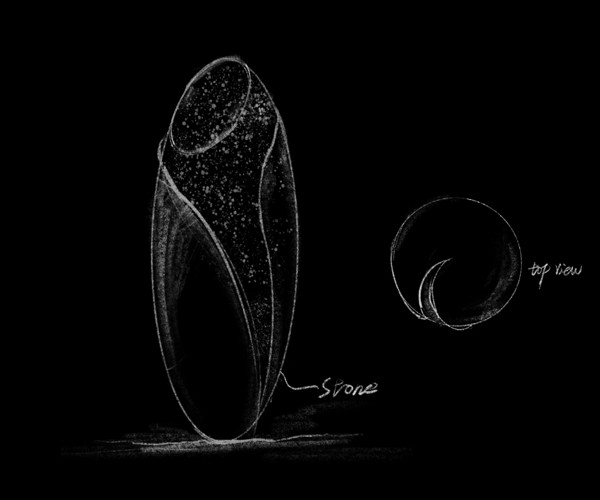
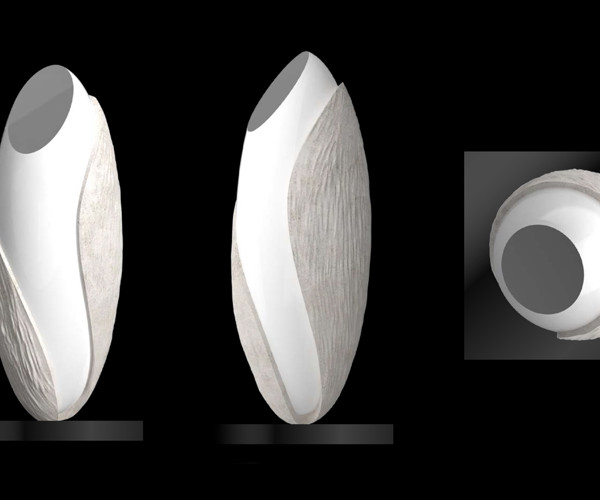
In art creation, “full” can refer to fullness or completeness, while “empty” refers to white space or unfilled space, which are opposing concepts. Empty, however, is not “empty”, but can also encompass everything, which is full. The work explores as much as possible the relationship between objects and blankness, and the relationship between the tangible and the intangible. Conceptual Inspiration: Rice Symbol: rice grain represents harvest, abundance and vitality, and is a universally used symbol in culture for hard work, hope and prosperity. The connection between nature and mankind: the sculpture combines elements of nature (rice and stone) with human intelligence (sculpture art) to show the concept of harmonious coexistence between mankind and nature. Combining the purity of nature with human ingenuity, this stone and bronze sculpture in the form of a grain of rice is both artistically beautiful and full of cultural and symbolic meaning. Through the skillful design of material, form and presentation, it can be a striking work of art in both indoor and outdoor environments, while conveying the positive meaning of harvest, hope and vitality.




RENEE CHENG
Renee graduated from Parsons School of Design with a bachelor’s degree and obtained her master’s degree from the University of Southern California. In 2022, she was honored the Hurun Under 30 Entrepreneurial Pioneer. Her international education background and broad global perspective have shaped her unique insights, driving the integration and development of technology, art, and design of Cheng Chung Design Group. She is committed to infusing digital technology into the design industry, creating an intelligent design ecosystem to make design more effortless. With a keen perception of current fashion trends, popular elements, and artistic tendencies, she focuses on resource allocation and construction in the art field, striving to bring artistic creativity and design aesthetics into living spaces and promote the cross-disciplinary fusion of art and design.
KINNEY CHAN
Mr. Kinney Chan graduated from De Montfort University in the UK with a degree in Interior Design and holds a Bachelor of Arts. He has over 30 years of experience in interior design and project management. Mr. Chan has worked for renowned design companies in Manchester, UK, such as Company Designer Limited, and in the United States with Dale Keller & Associates, participating in numerous large-scale international interior design projects. He has also served as the president of the Hong Kong Interior Design Association, a director of the Hong Kong Design Centre, and an advisor to the Hong Kong Trade Development Council (HKTDC). His works span hotels, bars, restaurants, residential homes, commercial shops, and corporate offices, earning numerous international awards. These accolades include the A’ Design Award from Italy, the German iF Communication Design Award, the JCD Design Award Silver Prize from Japan, the Interior Design Gold Key Award from the USA, the Best of Year Award by Interior Design magazine, the Hong Kong Top Ten Outstanding Designers, and the Asia Pacific Interior Design Awards Grand Prize, establishing his influence globally.
SYLVIA XIE
Sylvia with creativity and art as its sustainable pursuit, advocates the integration of local culture, characteristics, customs and space environment, brings two-way interaction between space and people through artistic and perceptual perspectives, and integrates tradition and modernity through design language. Collision with the West, the combination reproduces the optimal solution of the design.
CONNIE HUANG
Graduated from the University of Exeter in the UK, Connie has a rich professional background and international forward-looking vision.
In 2019, she became the co-founder of Raritag together with Renee Cheng, aiming to promote the smart transformation and upgrading of the interior design industry and make design more efficient. In 2023, the Raritag team won the first prize of the “Guangdong Engineering Survey and Design Industry Association Science and Technology Award” for its smart design generation system Transfusion, assisting the interior design industry to break through content productivity tasks, achieve high cost efficiency, and provide new insights for the future development of the industry. With her smart design management concept, Connie and the Raritag team jointly created the leading digital platform IDEAFUSION, which provides targeted solutions to a series of difficulties in design projects and innovates and efficient collaborative working models.
OMNE VIVUM
Designer
Giacomo Garziano GG-loop (Netherland)
Company
Margraf
Material
Fior di Pesco Carnico by Margraf
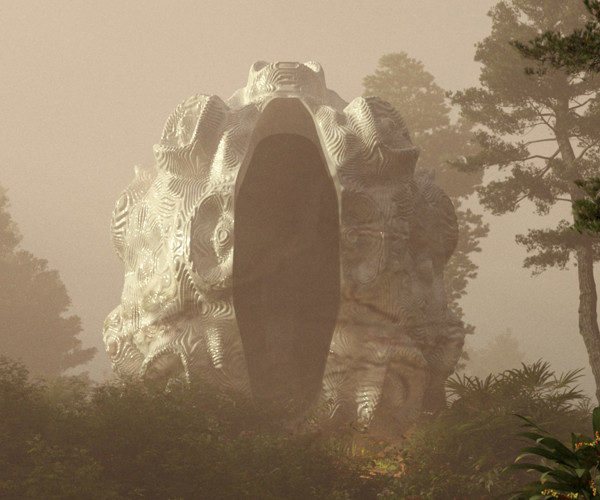
Omne Vivum takes inspiration from the cosmic egg-a mysterious, timeless object symbolizing the essence of creation. The project features a protective, intricate outer shell that contrasts with its seamless, soft, and embracing interior curvature, echoing the dual aesthetics of an egg or cocoon. The interior is a meditative space where you can withdraw from the outside world and immerse themselves in a timeless realm. This pavilion creates a sanctuary for introspection, symbolizing the universal essence of life and the cosmic egg’s role as a source of creation and connection.
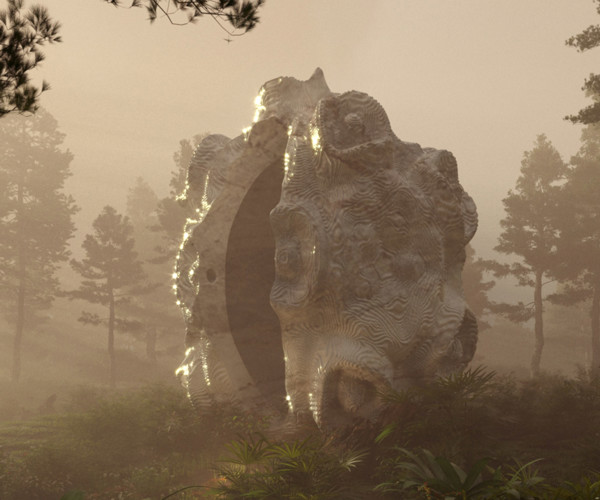

GIACOMO GARZIANO
Established in 2014, GG-loop believes that design is not simply about creating functional objects and spaces. Instead, design should tell a story, taking its user on a journey. GG-loop tackles design challenges with this in mind, articulating a biophilic vision for projects that is at once future-forward, organic, regenerative and refined. With studio in Amsterdam and Milan, design outcomes are embedded in a recurrent back story with an emphasis on objects and spaces that envelop the user. GG-loop also harnesses the history and craftsmanship within a country yet offers a global perspective in terms of forms and trends. The ‘loop’ to which the studio’s name refers comes from the studio’s iterative process of inquiry into a project or brief, to explore an underlying design idea. GG-loop’s realised projects include Freebooter (2019) and The Seed of Time (2015). The studio won several awards such as the Frame Award (NL), the WAF Award (UK), and the Best of Year 2019 Award (NY). GG-loop was founded by Giacomo Garziano, a graduate of Facolta’ di Architettura di Firenze (2008). His eclectic approach creates multi- sensory experiences, his objects becoming an organic extension of the user, lifting the boundaries between the human and its surroundings.