THE PLUS THEATRE
Business, culture and training meet natural stone
ARCHITECTURAL MODULES
Hall 10
Curator: ADI Italia – Associazione per il disegno industriale – Delegazione Veneto e Trentino Alto Adige
Trame di Marmo — Marmi Industria Friulana e Cregeo — Gianpaolo Allocco Delineodesign
Kyma — Quarella e Marmi Santa Caterina — Nicola Bariol
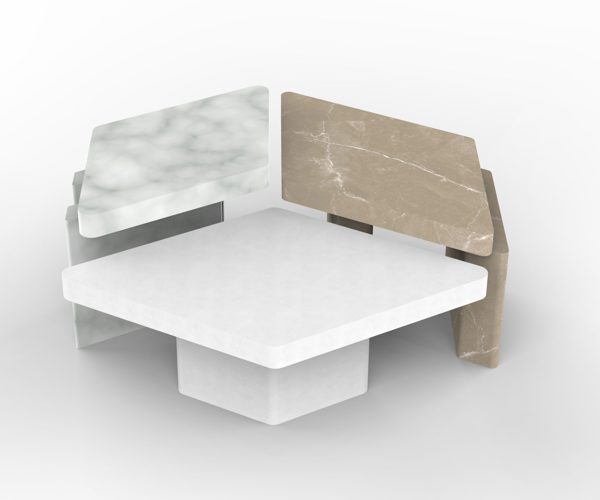
Hexagonlab — Leather Stone — Giovanna Carturan e Valerio Facchin
Gradiniglia — Agglotech — Paolo Criveller - Luca Mazzucco
Niemeyer — Bertola Pietre — Cristian Dal Bianco
Bugnato Allegro — Marmoles Luis Sanchez (ES) — Matteo Leorato
Cunei e Forme — Quintarelli Pietre e Marmi — Maria Vittoria Malgarise
Totem Wall — Freingruber — Pannoia e Stein Schwarz (AT) — Patrick Moroder
Frames — Gruppo Tosco Marmi — Paolo Perbellini e Justin Newall
RoofLeaf: tegole per tetti verdi — MapSlate — Eleonora Pesce
Trilatero — Achille Grassi International — Franco Poli
I Porfido — Porfidi Italia 2000 — Luigi Siard
SMM — LMA Machine-Kaleidostone — Giulia Zampieri e Jessica Di Mare
Metàlinè — Quintarelli Pietre e Marmi — Ascanio Zocchi
Modulo Modesto — Guardini Pietre — Carlo Trevisani
Raised Vein — Franchi Umberto Marmi — MM design Alex Terzariol
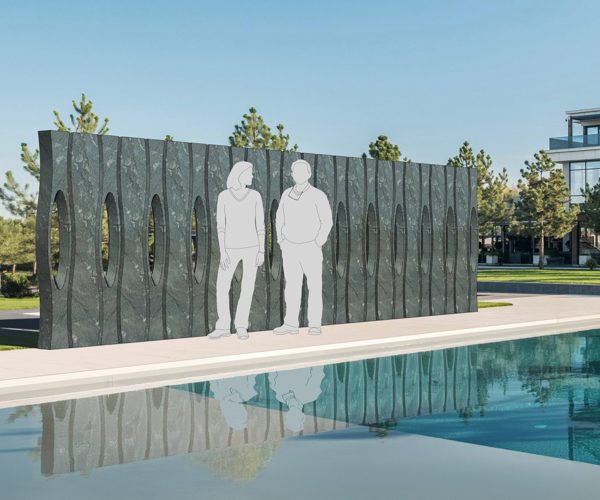
TOTEM WALL
Designer
Patrick Moroder
Company
Pannonia Stones GmbH and Stein Schwarz
Material
Pannonia Green
Module dimensions
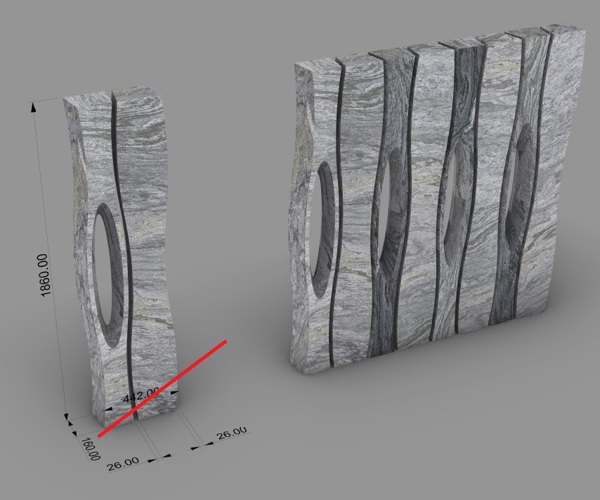
45 x 16 x 186 H cm (double element)
After initial concept sketches and a joint briefing on technical feasibility and aesthetic objectives, we opted for a two-module partition with a ‘seeing and not seeing’ theme. Trapezoidal columns create the illusion of a moving wall. Distances appear fluid and variable. The oval opening in the middle, milled in an elliptical and conical shape, allows the children to see through and gives the wall a light appearance while keeping it firmly connected to the floor.
Processing techniques
Source material for the modules is a solid stone tranche made of Pannonia green. The contours and holes are milled out on both sides using a 5-axis CNC bridge saw with a diamond milling tool. The surface processing and drilling of the mounting holes is done manually with machine support.
PATRICK MORODER – MORODERDESIGN
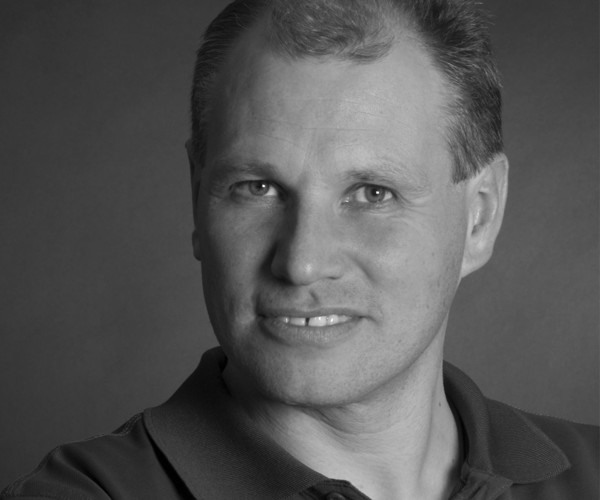
Born in 1965 in Val Gardena and raised in a renowned family of sculptors, Patrick Moroder’s creative talent was evident early on. In 1982, he obtains the master craftsman certificate at the art academy in Ortisei and graduates in applied arts, as well as from the vocational school in Bolzano in the furniture sector. After the specialisation in product design at the IED in Milan, he acquires valuable experience in the design studio Matteo Thun & Partners. As a co-founder of MM Design Bolzano, he develops, among other things, the Attac carabiner. In 1998, he teaches at ADB Bolzano and founds MoroderDesign, which has been managing product, corporate and interior design projects for its clients for decades.
METÀLINÈ
Designer
Ascanio Zocchi
Company
Quintarelli Pietre e Marmi Srl
Material
Verdello di Trento
Module dimensions
cm 20x40x3
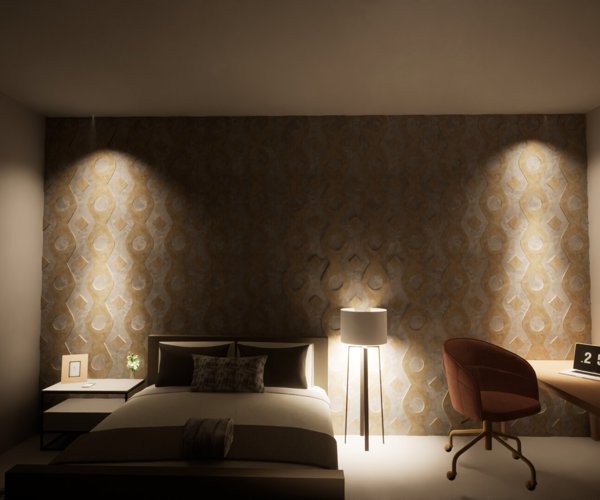
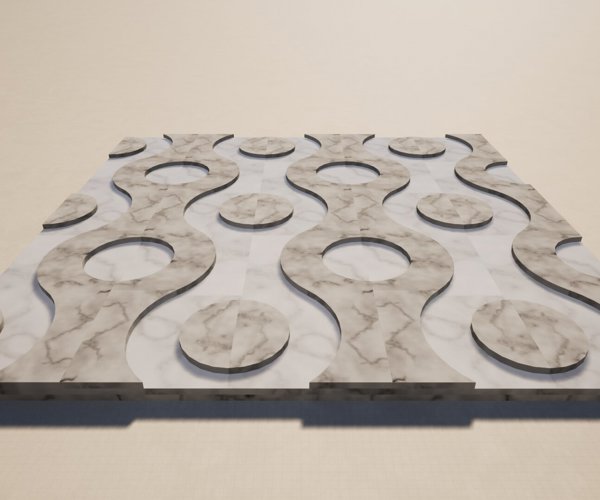
A line, a thickness carved into the white Verdello di Trento, the curved line that merges with the straight line, shapes are born, the square and the circle and you can also see the triangle, the basic shapes of geometry that are created by positioning the 20×40 module, to become a decorative element of the facade in interiors and exteriors. Processing of a shiny and satin surface to highlight the chiaroscuro.
Production technique
CNC excavation, hand carving of the rebate, and final polishing with brushes.
ASCANIO ZOCCHI
Ascanio Zocchi, an Italian artist and designer, was born in Riva del Garda in 1971. The mountain landscapes of Trentino, with their fragile balance, have always guided his designs, attentive to environmental sustainability and the sensitive and cultured use of natural materials. His deep knowledge of materials such as wood, marble and glass, which he has shaped into harmonious design projects aimed at combining ethics with aesthetics, has earned him three international A’Design Awards in the home objects and accessories category, and he has been included in the prestigious ADI Design Index 2023 with the Kotiso glass table. He is the design manager of Glass Group, an important Italian company in the flat glass processing industry. He is a member of the ADI Design Index Permanent National Design Observatory, at the Compasso d’Oro Museum in Milan.
NIEMEYER
Designer
Cristian Dal Bianco
Company
Bertola Pietre di Bertola Aldo & C. Snc
Material
White Vicenza stone
Module dimensions
W360/300/240 x H500 x D150
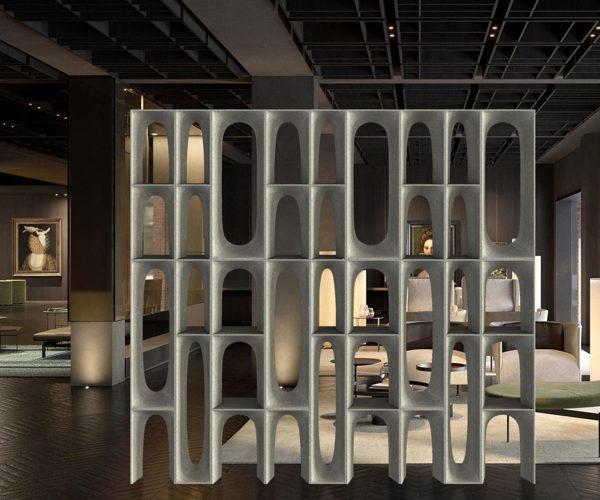
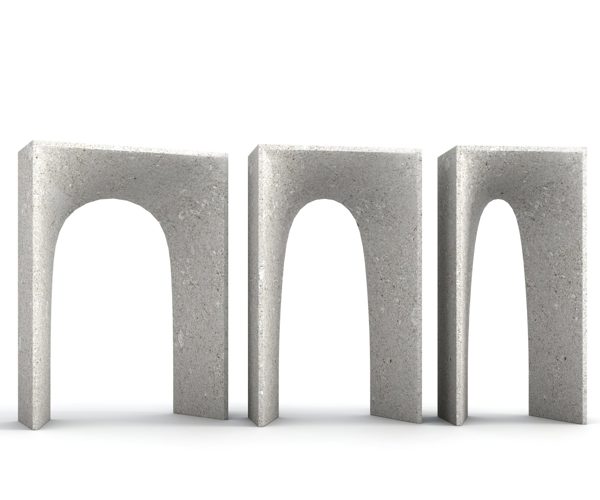
The concept draws inspiration from the main theme of the exhibition by paying tribute to one of the most important international architects of the 20th century: Oscar Niemeyer. The proposed module takes up the features of the arches designed in the building designed in 1965 for the headquarters of the Mondadori publishing house in Milan. The intention is the creation on a reduced scale of the building’s arches, broken down into individual modules, so as to leave interpretative freedom in the possible compositions that can be created, creating games of full and empty spaces, or games of reflections, coupling mirrored glass in the background, without neglecting the possibility of displaying objects placed under the arches. Without forgetting the practicality and concreteness that each project requires
Production technique
Block extraction, sawing with single blade. Trimming pieces to size with CNC disk. 3-axis CNC shaping with tool. Finished with hand-made abrasive paper.

CRISTIAN DAL BIANCO
Graduated in 2001 from the Italian Design School of Padua, I immediately began to collaborate with Italian design studios as a designer in the furniture sector, developing products for national and international companies, designing showrooms and exhibition installations for the same. As a project manager I collaborate for the creation of custom furnishings in the contract retail and hotel sectors. There are many inspirations that lead us to the definition of an idea and the creation of new projects, science, history, art and daily experiences; the right alchemy comes from the ability to dose these ingredients with sensitivity.
ROOFLEAF: TEGOLE PER TETTI VERDI
Designer
Eleonora Pesce
Company
MapSlate
Material
Ardesia
Module dimensions
40x30cm
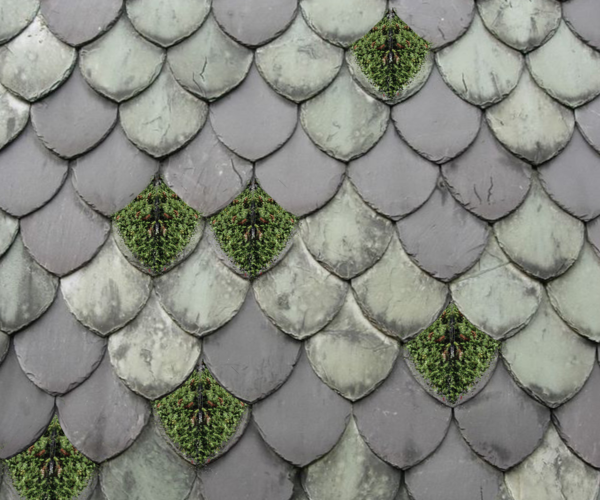
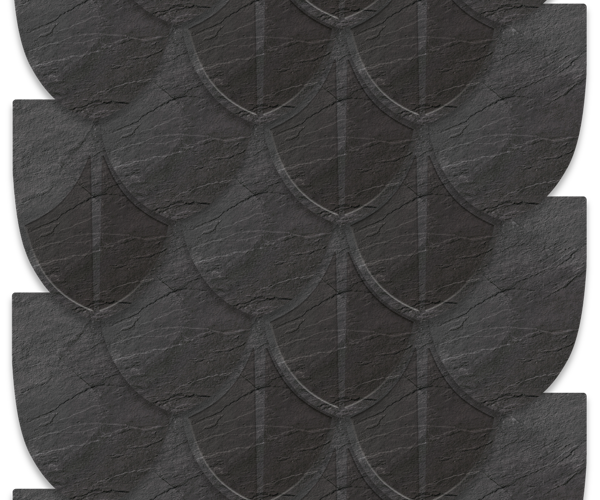
The Roofleaf tile project, as well as by assonance, is inspired by green roofs. Green roofs are a corner of nature in atypical contexts and help to improve the environment in which we live by cleaning the air. The tile module designed for this project is a leaf-shaped inspired and made of slate. It is worked with a slight milling suitable to hold seeds/ pollen/ spores of plants carried by the wind and to keep a light layer of water so that they can grow. The goal is to create a “natural effect” and spontaneous green roof through specially designed surfaces so that wind, water and plants work in synergy to create points of green in an atypical, organized and not “intensive” context.
Production technique
The material is split by hand with a simple chisel and the manual work of a skilled splitter. Once divided into sheets of approximately 1 cm thick, it is shaped with a waterjet and milled. Everything is finished by hand again.

ELEONORA PESCE
I am an industrial product designer from Venice with a master’s degree in industrial product design and I deal with innovation. Among my distinctive features is the research and definition of new product concepts aimed at innovation. I come from an artistic high school and this today allows me to have a relationship with freehand drawing, illustration and graphics of symbiosis and consistency with the product. I design fashion accessories in the field of eyewear and jewelry. I am very curious and i try to use both the brain hemispheres, the creative and scientific ones. For this reason I have a transversal and multidisciplinary approach to the project.
"I PORFIDO" OR THE IDENTITY OF PORPHYRY
Designer
Luigi Siard
Company
Porfidi Italia 2000
Material
Porfido
Module dimensions
cm 30×10
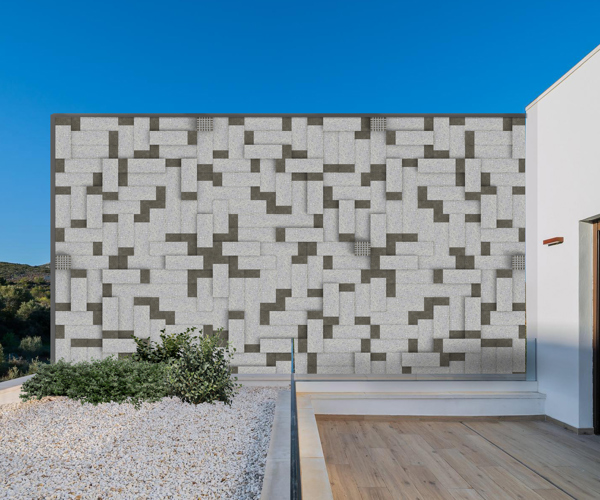
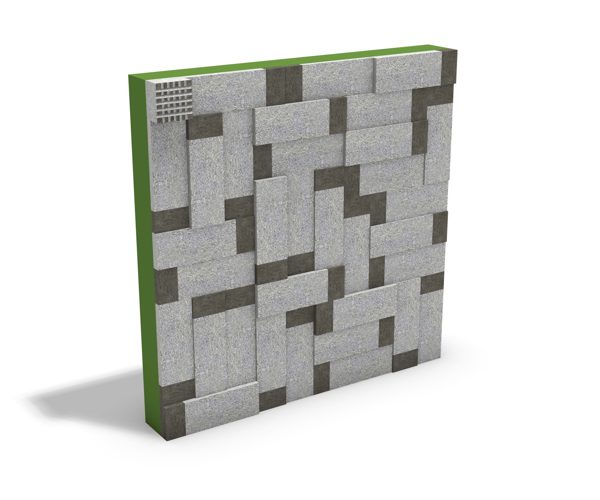
It is always fun to play with a simple module and discover the infinite possible combinations, “i porfido” has in itself the measured combination of two finishes; the larger portion is bush-hammered and the smaller one is polished. Both in cladding and flooring, the combination of the two finishes allows the construction of more or less complex or rhythmic designs. I porfido can be made in different thicknesses in order to increase the character in the movement of a desired design.
Production technique
Saw cut and bushhammered and polished finish.
LUIGI SIARD
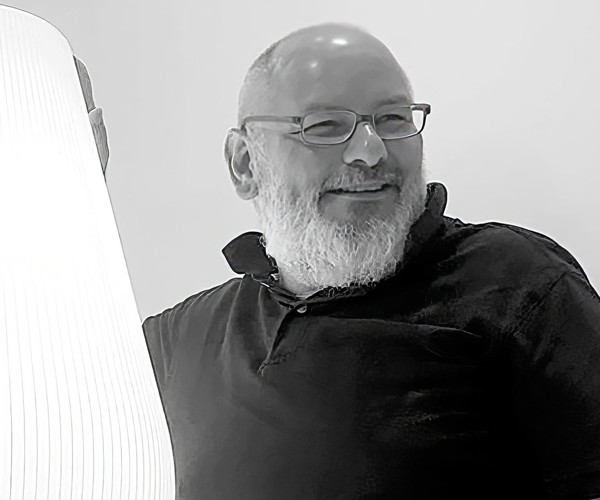
Industrial designer since 1994, the year in which he designed the city bike chosen for the Airton Senna Foundation line for Carraro and began his activity as a designer at the Greggio Argenti Group. Between 1995 and 2014 he held the role of product manager at Deroma Vasi and followed the development of all his projects from the idea to the creation of the mold including logistical problems, specializing as an industrial designer. As a designer he collaborates with various companies including Margraf, Lapitec, Epoca and Veca for which he also industrialises products by other architects and designers.During his years of activity he has acted as a lecturer at the ISIA in Faenza and has held lessons at some design and economics faculties to deal with the relationship between design and logistics and the production of industrial silverware.
WEDGES AND SHAPES
Designer
Maria Vittoria Malgarise
Company
Quintarelli Pietre e Marmi Srl
Materials
Pietra Bianca della Lessinia, Pietra Rosa della Lessinia, Marmo Rosso Trento, Marmo Verdello Trento
Module dimensions
cm 40x40x2
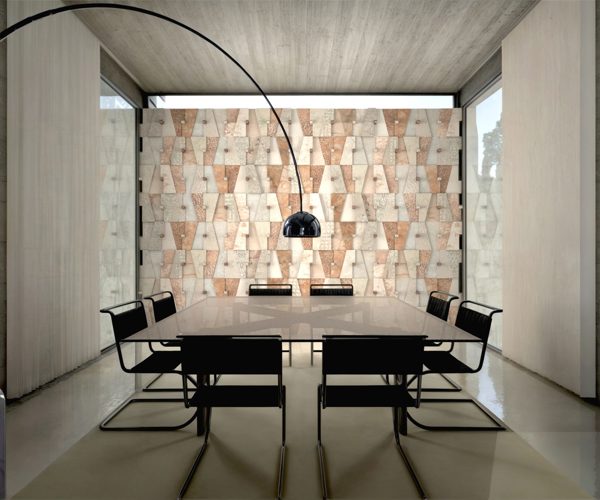
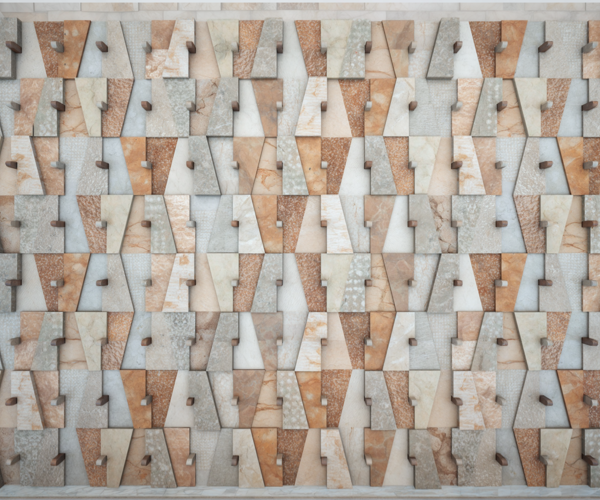
“Cunei e Forme” is a wall cladding system for enhancing and recovering the Lessinia Stone and Rosso and Verdello Trento Marble. Starting from a basic design, the cladding elements and decorative wedges are obtained from waste sheets or offcuts; these will then be finished by hand according to traditional historical techniques. The different thicknesses of the starting slabs will create a vibrant play of shadows on the wall. The wedges simply inserted into the central hole can change position for the owners’ fun.
Production technique
Hand grading, hand bush-hammering, natural quarry split, sandblasted and brushed quarry split, hand chiseling, sandblasting and brushing, bush-hammering and brushing, flaming and brushing, grinding.

MARIA VITTORIA MALGARISE
Graduated in Architecture in 2018 at the IUAV University of Venice, she works in a studio that deals with space regeneration and design in multiple fields. For some years with the architect Maria De Rossi she has undertaken experiments in Primary Teaching of Architecture in schools, developing in students a critical and constructive sense of Space and Environment that surrounds them. She loves Interior Design and thinking the project as an opportunity to create an Architecture based on the functional, psychological and emotional needs of the Clients with particular attention to the historical and artistic tradition of Veneto.
BUGNATO ALLEGRO
Designer
Matteo Leorato
Company
Luis Sanchez Mármoles
Material
Zebrino Gold
Module dimensions
50×1,15×1,83 cm
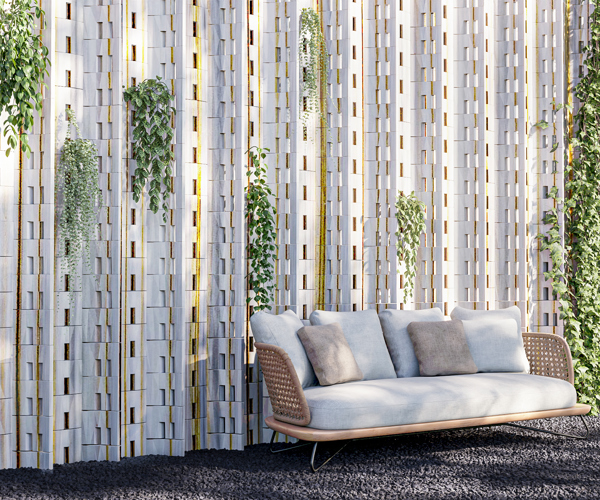
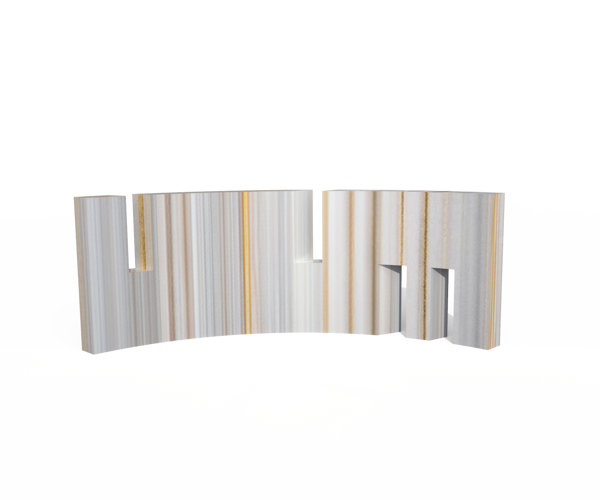
The “Bugnato Allegro” project draws inspiration from ancient Roman masonry works and later those of the Tuscan Renaissance, known as “bugne” or “bozze.” Historically, the “bugnato” protruded uniformly and could be conceived in various ways (gentle bugnato, smooth bugnato, rough bugnato), with the aim of conferring majesty to the facades of palaces and villas. The “Bugnato Allegro” project, on the other hand, aims to lighten the facades, allowing them to “breathe” thanks to its modularity. This design allows the passage of light breezes, isolating and cooling the exterior walls of buildings.
Production technique
Saw cut and CNC.
MATTEO LEORATO
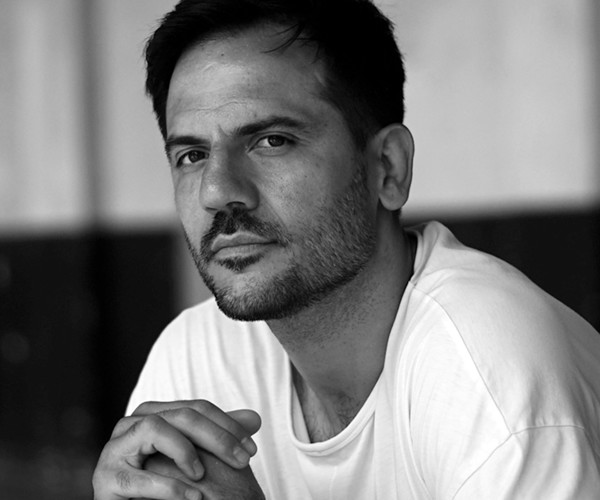
Matteo Leorato was born in Verona, and from the Veneto, he brings with him an attitude toward practical knowledge that leads to design intuition, refined by an international perspective developed through his extensive experience abroad. Matteo Leorato’s work focuses on the desire to develop objects in equilibrium between harmony and curiosity: clear, balanced proportions, brought to life by a tension evocative of other forms or functions. Human interactions are added to these elements as a key aspect of contemporary design, as the designer himself tells us: “I usually find myself far from the concept of a statue-like kind of object, but I love those products which are animated through the gestural expressiveness of the people who bring them to life: the wind-up watch is undoubtedly the object which best reflects this philosophy.”
FRAMES
Designer
Paolo Perbellini e Justin Newall
Company
Gruppo Tosco Marmi
Material
Classic Palissandro, Bluette Palissandro
Module dimensions
customize
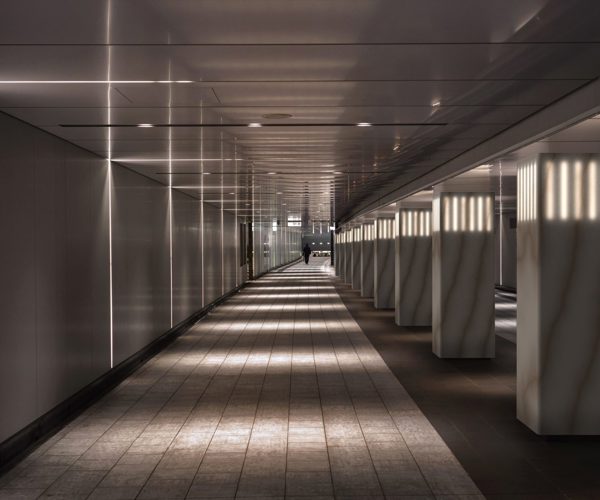
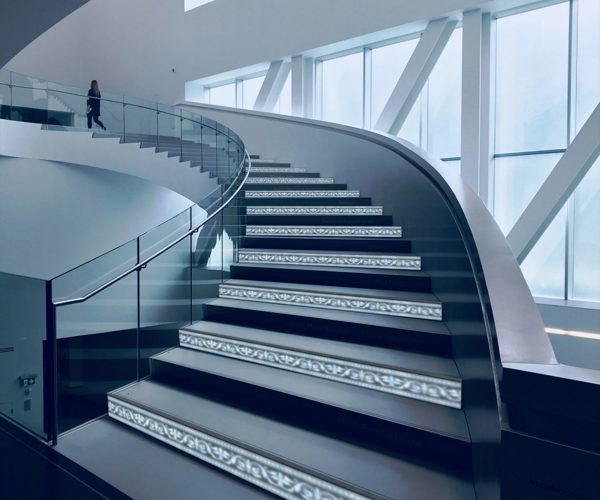
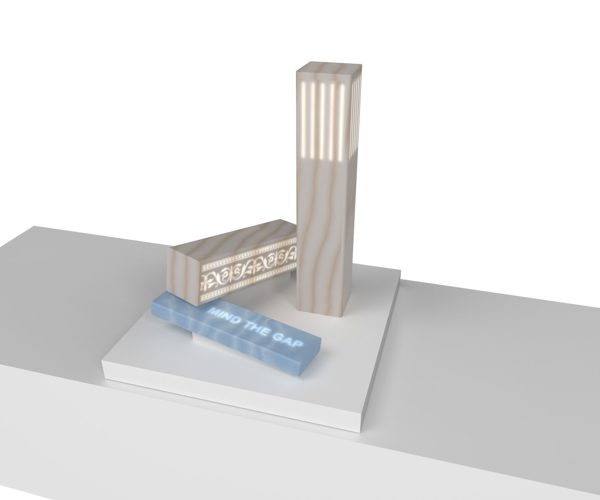
The project forms part of the line of research “Aura Lapis” from Fishform, characterized by the use of technology combining LED lights and marble. Flat surfaces and objects are without design or decoration. The subject, light, design or message, appear from behind the surface, to later disappear. “Frames” are stone artifacts, that come from the past of a near future. Columns and friezes reinterpret decorations with luminous strokes. Delicate and mysterious messages that appear and disappear in different architectural contexts.
Production technique
Surface polishing and CNC reductions. Insertion of LED light.

PAOLO PERBELLINI
Paolo Perbellini founded the Fishform studio which has been carrying out its industrial design and engineering activity since 1986, mainly in sectors characterized by a high industrial technical component. The experiences in the design of bodies for industrial machinery are significant. The same innovative and planning rigor characterizes excursions in different sectors.
HEXAGONLAB
Designers
Giovanna Carturan e Valerio Facchin
Company
Leatherstone
Material
Royal Yellow (wall) | Paste composed of powder and flakes of Giallo Reale and hydraulic lime (flooring)
Module dimensions
cm 30x20x15 /15x10x6 h
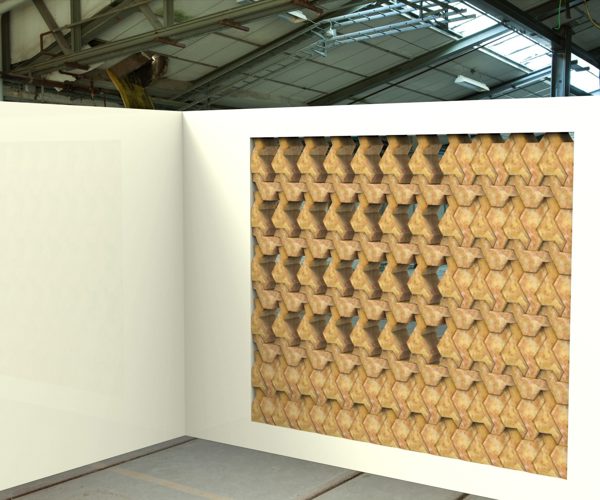
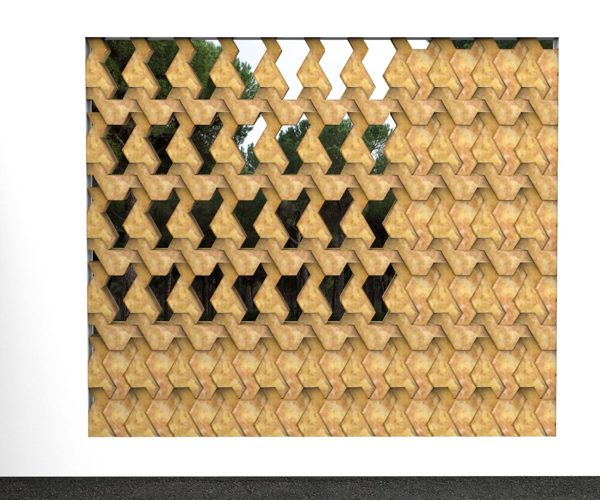
Hexagonlab is an experiment whose shape comes from a geometric elaboration of the equilateral triangle module of the regular hexagon to form broken lines that fit together. With the third dimension, the thickness of the material shapes a non-regular volumetric texture. It is a double experiment:
A) Flat version module composed of a mixture of small scraps of marble and lime to create a flooring tile.
B) Module as a worked block suitable for wall facings or dry masonry whose external convex surface creates lights and shadows over the entire surface.
Production technique
Taglio e lavorazioni, water jet e finitura a fresa per la proposta a parete e formatura in stampo e finitura a fresa, per la proposta pavimentazione.
VALERIO FACCHIN
Architect and designer associated with ADI and BEDA since 1988. Since 1989 he has worked as a freelance consultant in the field of Industrial Design. In 1997, he was a founding member of CDE srl, a company that carries out business consultancy for the design and engineering of industrial products. In 2003 he was a founding member of Adiatek srl, a company that produces industrial floor scrubbing machines with the role of design manager. Since 2012 he has returned to dedicating himself completely to freelance work, consultancy for important industrial cleaning companies and industrial production in general. From 2013 to 2017 he edited the Design and Ergonomics column for the specialized monthly magazine Pulizia Industriale e Sanificazione. Since 2014 member of the Permanent Design Index Observatory of ADI (Association for Industrial Design).
GIOVANNA CARTURAN
Giovanna Carturan, designer associated with ADI and Beda since 1986. Always a freelancer in design and business communication. In 1997 founding member of CDE srl. In 2003 he was a founding member of Adiatek srl, a company that produces industrial floor scrubbing machines with the role of communications manager. Since 2006 he has returned to dedicating himself to freelance design and graphics.
SMM
Designers
Giulia Zampieri e Jessica Di Mare
Company
LMA Machine and Kaleidostone
Materials
Bianco Carrara, Pietra lavica, Grigio Carnico, Pietra Serena, Pietra del Cardoso, Bardiglio, Verde Guatemala
Module dimensions
cm 70x70x40
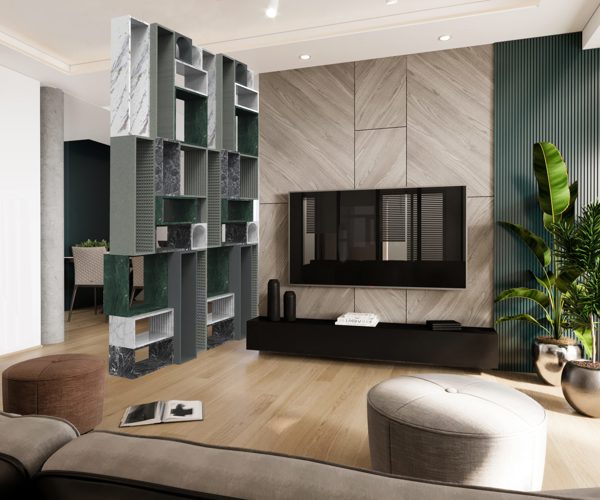
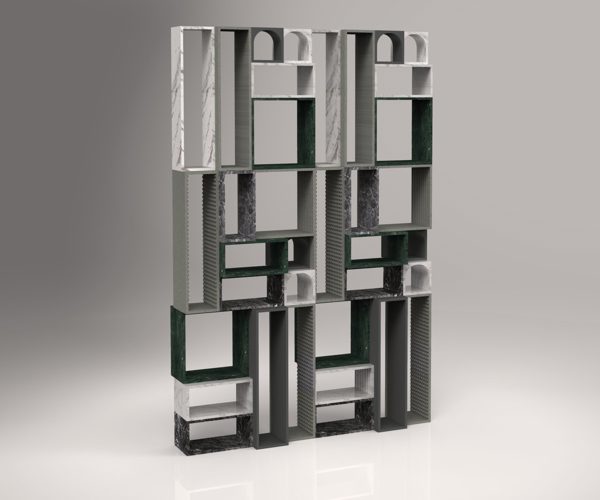
A design element made from selected marble processing waste that combines aesthetics, functionality, and craftsmanship. The project aims to create a partition element that can be assembled in various configurations to create bookshelves or dividing walls. The modular approach allows to make different configurations. The modules are sized based on what usually remains as residue from processed slabs and blocks and are dry-fitted together with steel anchors. The textures on the marble are created with disc cutting and CNC milling.
Production technique
Saw cut and CNC – Finishing, sanding and polishing with Lma Machine machines, with products certified by LMA.


GIULIA ZAMPIERI
Originally from Trentino-Alto Adige, Giulia Zampieri is a strategic, product, and graphic designer. She studied at the Academy of Fine Arts in Verona, where she obtained her First Level diploma in Artistic Design for Business and her Second Level diploma in Italian Strategic Design. Currently, she works as a freelancer and design researcher. With a great passion for craftsmanship and innovation, materials and the emotions that they convey, Giulia continues to research material anthropology and everyday objects, as well as exploring craftsmanship combined with contemporary technologies.
JESSICA GIOVANNA DI MARE
Jessica Giovanna Di Mare is an architect and designer practicing between Naples and Milan. After her initial studies at the University of Naples Federico II, she specialized in Architectural Design at the Polytechnic University of Milan. Since 2017, she has been working at a prominent Milanese studio specializing in Hotel and Restaurant Design. In 2020, she moved to Naples and began collaborating with various architectural firms on residential projects. Additionally, she serves as a technician and artistic director for a company specializing in marble processing. Her studies in architecture and design have enabled her to combine technical knowledge with aesthetics and the ability to develop a project from the initial idea to the furniture design and the realization of the work.
KYMA
Designer
Nicola Bariol
Company
Quarella and Marmi Santa Caterina
Material
collezione Urban Grey, colore Vivaldi
Module dimensions
cm 90x90x4
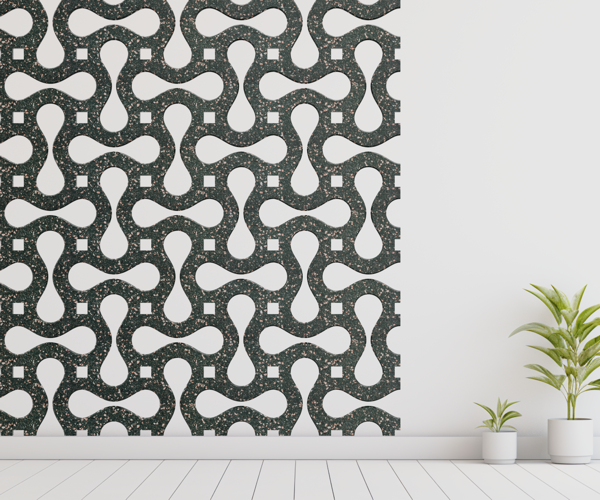
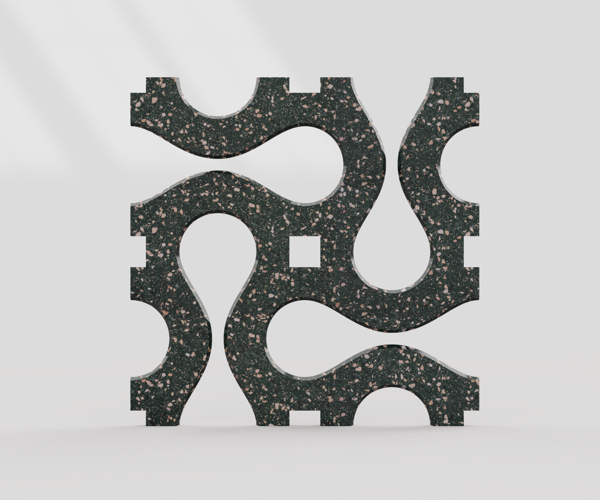
Kyma is a marble module inspired by the graceful forms of Chinese architecture. Drawing from the elegant, flowing lines of traditional bridges, Kyma is designed to seamlessly integrate into any interior space. Its curving shapes introduce a fresh, dynamic element to interior design, transforming surfaces into captivating visual experiences. The module’s flexibility allows for customized space flow, offering the opportunity to direct the curves left or right to suit any specific design vision.
Production technique
Water jet cutting and milling.

NICOLA BARIOL
With a master’s degree in Product and Visual Communication Design from IUAV University of Venice, I have established my career in China, collaborating with both Italian and Chinese partners on product and interior design projects. Currently, I am the Design Director of Guangdong Zebra Design Co. Ltd, based in Foshan, Guangdong province. I lead a creative team in the design and development of cutting-edge design solutions, working with both Chinese and international clients. My mission is to create products that seamlessly blend functionality and innovation while being deeply attuned to human needs and environmental sustainability. I am committed to a design approach that prioritizes attention to detail and quality.
TRAME DI MARMO: ALLEGGERIRE LA SOLIDITÀ
Designer
Gianpaolo Allocco
Company
Marmi Industria Friulana
Material
Clauzetto fiorito
Module dimensions
cm 20x150x12
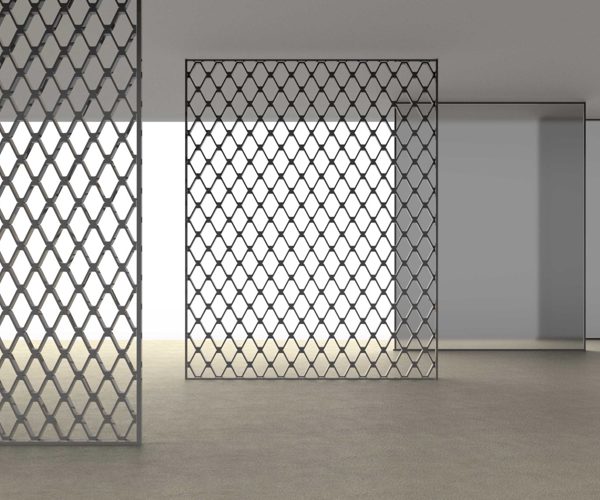
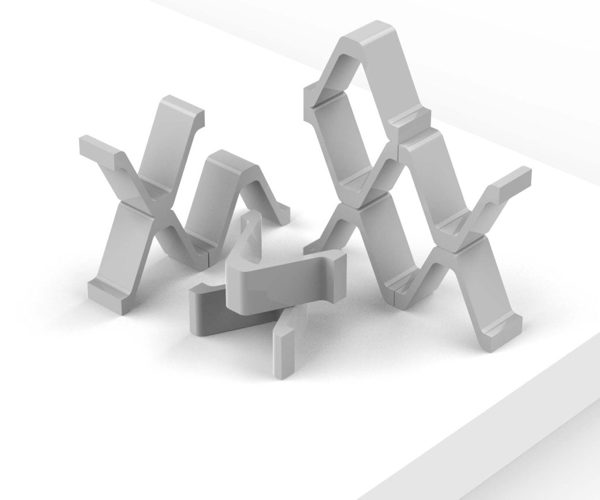
Trame di Marmo (Marble Wefts) is a module consisting of marble slabs arranged sequentially to simulate a moulded wire mesh. Its geometry is designed to combine the classic and strong aesthetics of marble with a modern and light approach, but also to be used on scrap and so minimise material waste. This concept represents an innovative interpretation of marble as a decorative material that ‘breathes’ and integrates with modern architecture.
Production technique
Water jet cutting and milling. Finishes: honed, sanded, rolled and bushhammered.
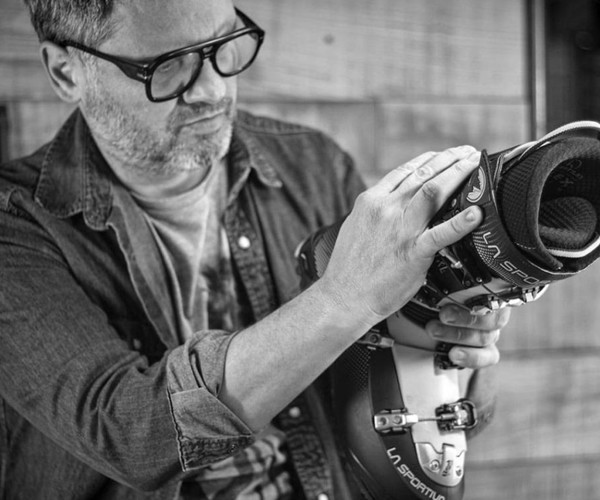
GIANPAOLO ALLOCCO
Delineo Design, founded by Giampaolo Allocco in 1999, is an industrial design, product design and communication studio point of reference in Italy for sports design. A nimble structure, located in the industrial heart of the North-East in Montebelluna, the World District of the Sport System, able to move on the international market, flanking the world’s biggest sports brands, but not only. Scott, K2, Lavazza, Manfrotto, Wega, Stiga, IFI have chosen his collaboration.
MODESTO MODULE
Designer
Carlo Trevisani
Company
Guardini Pietre
Material
Pietra della Lessinia
Module dimensions
customize
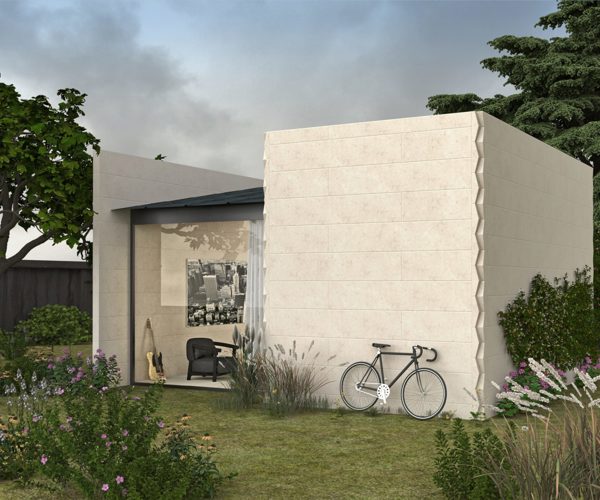
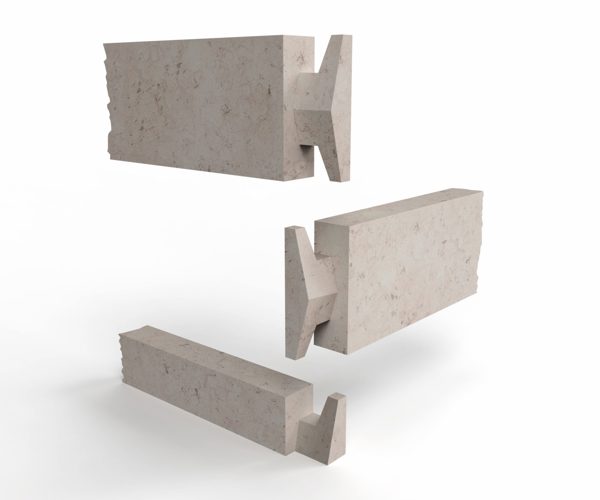
A module inspired and dedicated to the “Stalla del Modesto”, a historical architecture of the Lessini mountains, a spontaneous expression of rural architecture with the Pietra della Lessinia slabs that fit together. The hybridization of various interlocking architectural constructions, from stone ones to ancient wooden shelters made of logs to contemporary architectural research of “shelters”, is realized in this module. The optimization of production by exploiting cutting techniques is the basis of its characterization: the overlapping of the modules creates a multifaceted edge in the architecture.
Production technique
CNC disc cutting.
CARLO TREVISANI
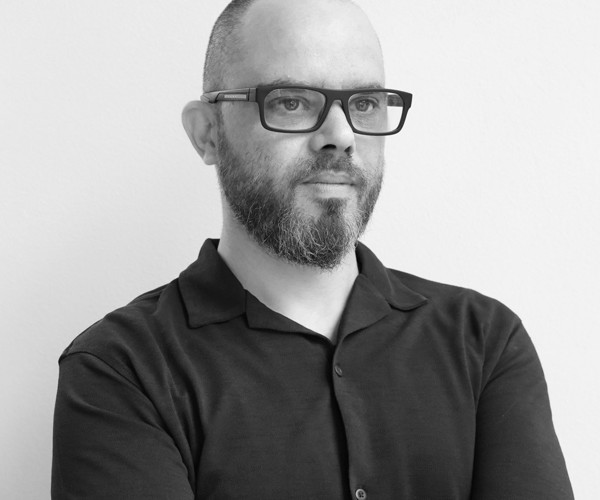
Dopo essersi diplomato all’I.S.I.A. di Faenza, inizia la carriera nel 2000. Da sempre attento all’approfondimento delle relazioni tra esseri umani, oggetti e spazi, il suo lavoro spazia dalle installazioni al design del prodotto, alla didattica del design. Collabora con aziende sia italiane che estere e dal 2012 ricopre incarichi associativi in ADI. E, sempre dallo stesso anno, si occupa di didattica del design. Ha esposto in numerose mostre nazionali e internazionali, vincitore di premi internazionali di design è presente in numerose pubblicazioni.
GRADINIGLIA
Designers
Paolo Criveller e Luca Mazzucco
Company
Agglotech Spa
Material
Il REG5101 – Graniglia di marmo 50% “verde alpi 4” e 50% “verde alpi 5”
Module dimensions
cm 100x17x32
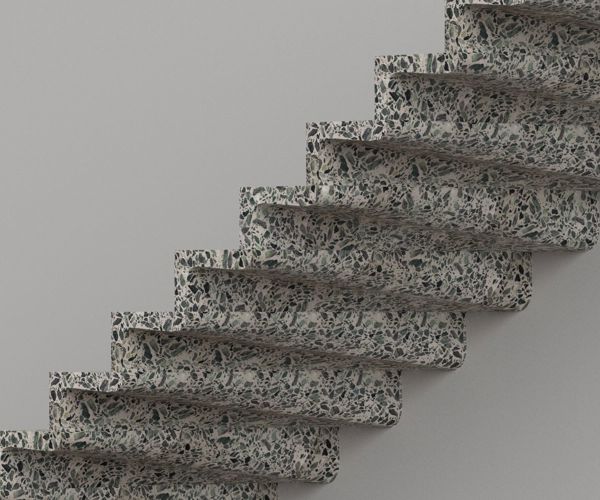
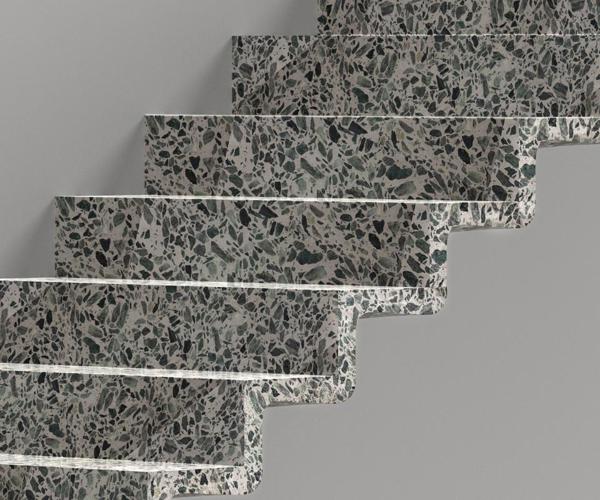
Gradiniglia is a cantilevered step made of marble grit. It is designed in accordance with the seismic standard in fact it has a special connection which makes it a whole with the curb inserted in the wall. The contrast between the two fronts is impressive: austere in the riser and footstep and having organic surfaces on the back, merging the waves of the sea with the petals of a flower.
Production technique
Agglotech terrazzo is the result of an industrial process that combines natural elements, such as marble chips, with cement and water without the addition of resins. Machining with 5-axis CNC machine. The pre-finished ones are obtained with diamond disc cuts. Subsequently, a combing is performed with the diamond disc. The finishing sanding is done by hand.
LUCA MAZZUCCO
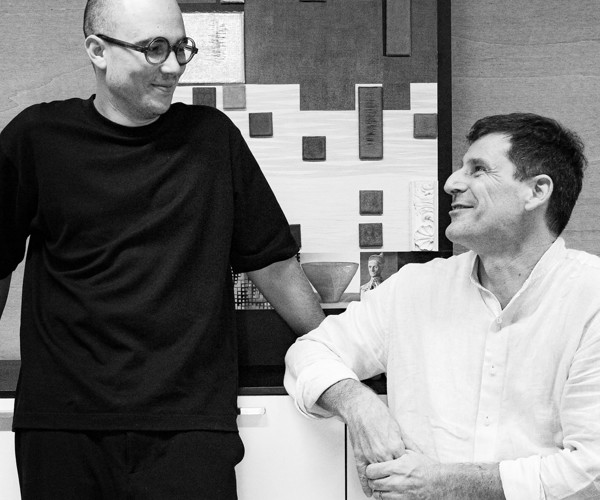
I am a designer with experience and transversal passion in different design environments: graphic, interior and product design. Curiosity, innovation and sustainability are the three words that characterize mine approach to the project. The design method is based on a strong critical and research component, mine Design vision is identified in an overall process shared between the parties, with the aim of investigating new paradigms of wealth and value for companies and society.
PAOLO CRIVELLER
Founder of the architecture studio called CrivéStudio I deal with urban planning, architecture, interiors and design. Careful listening, analysis, study, creativity and updating are the basis of my projects
TRILATERO
Designer
Franco Poli
Company
Achille Grassi International Srls
Material
Vicenza Stone
Module dimensions
cm 20x30x20
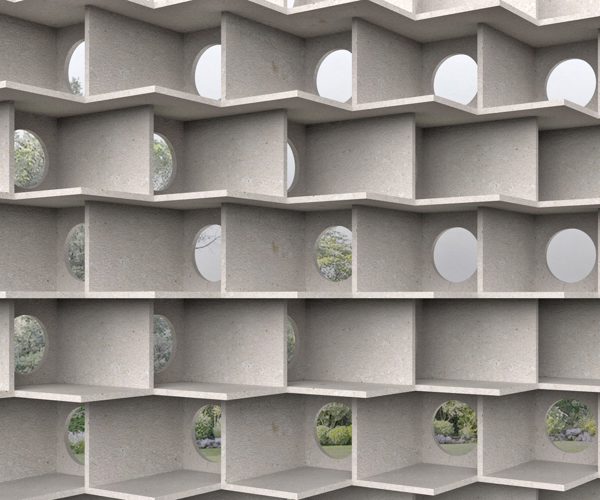
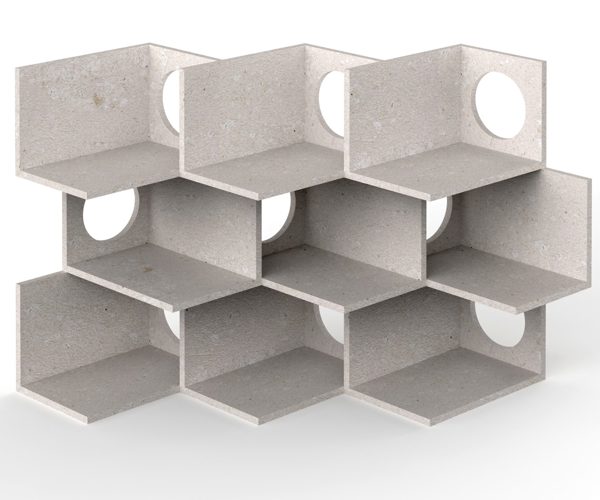
Architectural module in Bianco di Vicenza stone, Can be used to separate public and private spaces by creating large organic and semi-transparent partitions. The module lends itself to countless aesthetic configurations that work on the depth of chiaroscuro and the light that penetrates from the circular hole in one of the three walls. The aesthetic effect is given by the repetition and alternation of horizontal planes (usable for display) and blind walls with perforated walls.
Production technique
CNC disc cutting and milling.

FRANCO POLI
A very well-known name in the panorama of Italian design Franco Poli began in 1974 with the artistic direction of Bernini s.p.a. and with a long collaboration with Poltrona Frau. In these fifty years of activity he continually remodels the languages of contemporaneity in search of a new humanistic vision of living. Among his works, in addition to the large collection of wooden furniture for the glorious BERNINI of Carate Brianza, a notable sequence of leather seats for MATTEOGRASSI which has earned him recognition all over the world. Professor of design at the Academy of Fine Arts in Venice and at the LABA del Trentino in Rovereto. Tutor for the C.N.R, visiting professor for the Polytechnic of Milan. His works are present in the collection of The Denver Art Museum, in the Fonds National d’Art Contemporain in Paris, in the Triennale museum in Milan and in the permanent collection of Farnesina Design. Among the numerous awards, there are five Good Design Awards from the Chicago Atheneum, an Australian DesignX and a Compasso d’Oro for the first coherent application of Topological Geometry in Design: Loom Chair for Matteograssi 2007. Among the most important exhibitions we mention the first triennial of Design CREATIVE JUNCTIONS held in the National Museum of China in BEIJING and the DOLCE STIL NOVO exhibition, “domestic landscape in contemporary Italy” held in TAIPEI in the Kaoshiung Museum of Fine Arts. Since 1998 he has lived and worked in Verona.
RAISED VEIN
Designers
MM Design Alex Terzariol
Company
Franchi Umberto Marmi
Materials
Calacatta gold, Bardiglio, Calacatta 900
Module dimensions
various sizes
The emerging trend in material usage celebrates craftsmanship and its technologies, adding significant value. The broad surface textures highlight artisanal excellence, skillfully blending natural, raw textures with smooth, modern finishes, showcasing the fusion of culture and artisanal expertise. Handmade objects result from sustainable design, imparting narrative character and lasting significance to projects. Decorative imperfections and the use of distinctive materials, combined with artisanal techniques, enable the development of unique surfaces that represent a new language of sustainability. Focusing on a distinctive aesthetic, MM Design, in collaboration with Franchimarmi, presents a project that enhances the texture of marble and the skill of local craftsmanship. Through the traditional technique of acid etching, the natural veins are accentuated, becoming contemporary decorative textures.
Production technique
CNC shaping and etching.