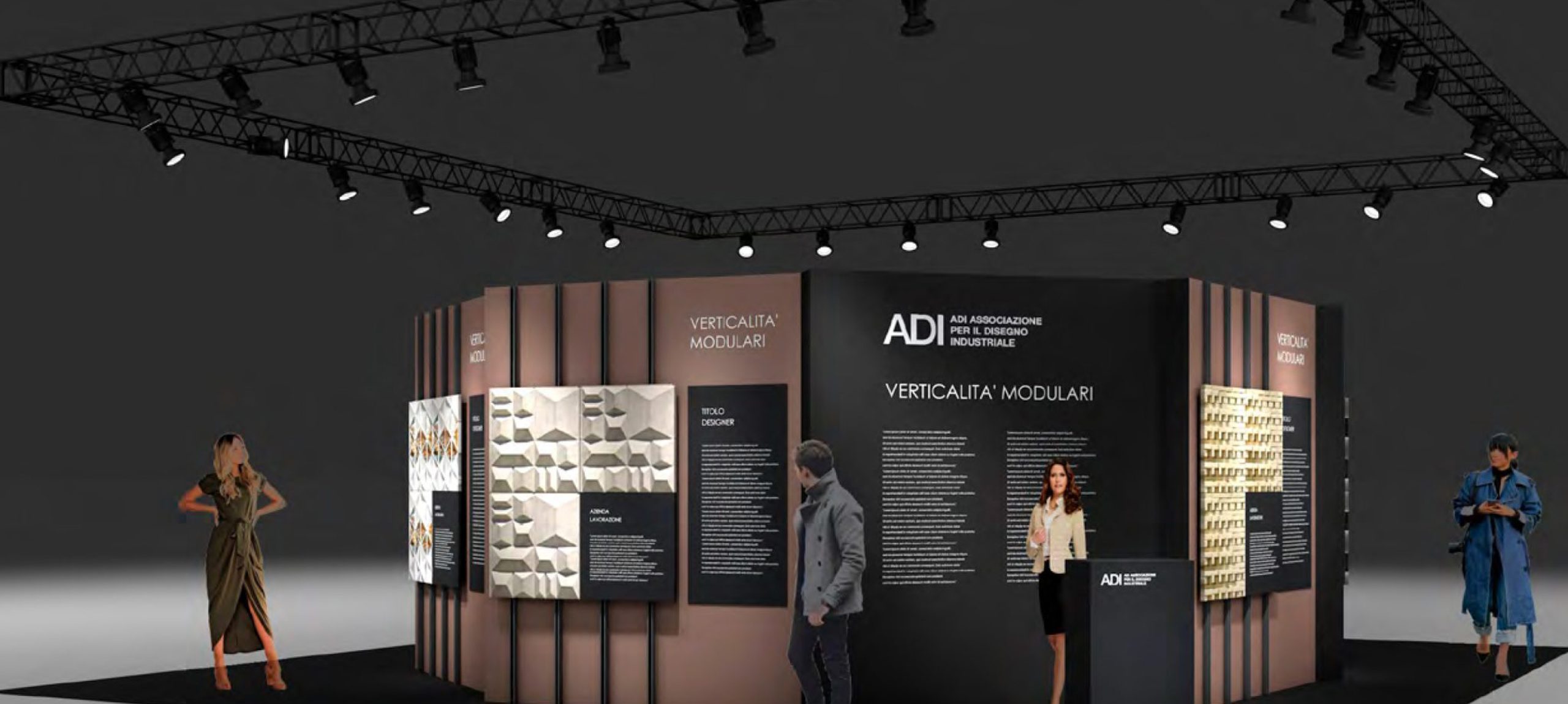
ADI Association for Industrial Design
MODULAR VERTICALITY
Prefabricated modular architecture is a branch of construction that combines design flexibility with construction efficiency, ease of assembly, quality control and optimisation of installation times, offering an advanced solution for contemporary building.
Applying the concept of prefabrication to a noble material such as marble can represent an interesting opportunity to reduce the costs of bespoke production and introduce a more sustainable model.
The aesthetic value and the formal design of the module determine the customisation of serial production. This is further enhanced by the varied use of colour and texture of natural stone, including its three-dimensional application, resulting in compositions with strong visual impact.
The theme
To propose marble elements to be used in construction through off-site architectural building methodologies.
Off-site construction systems are among the most dynamic technologies in the construction sector and represent one of the strongest drivers of innovation towards:
- advanced technological frontiers;
- environmental sustainability and performance of the final building;
- quality of living and usability.
In many cases, off-site construction makes it possible to industrialise elements that, in traditional construction, are produced through artisanal processes. By moving to a “dry” construction site, cost and time efficiencies of up to 50% can be achieved.
The industrialisation of components allows both cost reduction and quality control.
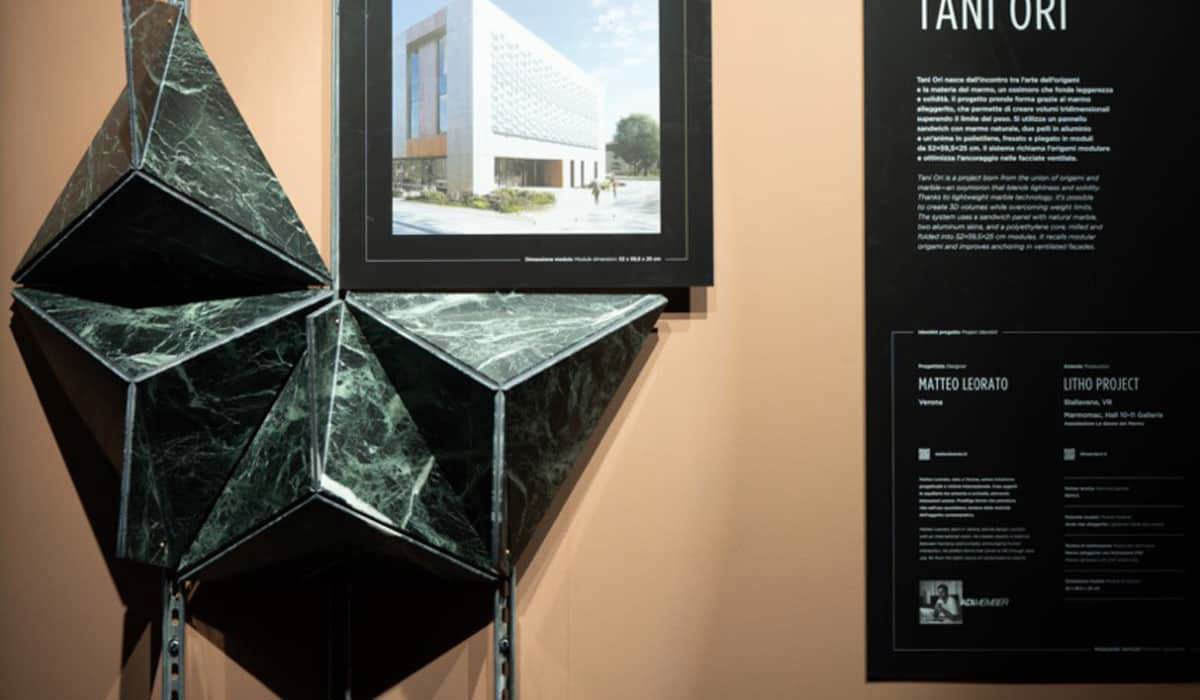
Tani Ori
Desinner
Matteo Leorato
Production
Litho Project
Desginer
Matteo Leorato
Technical Partner
REMAX
Materiale
Lightened Verde Alpi marble
Processing technique
Marble lightened with CNC machining
Measurements
52 x 59,5 x 25 cm
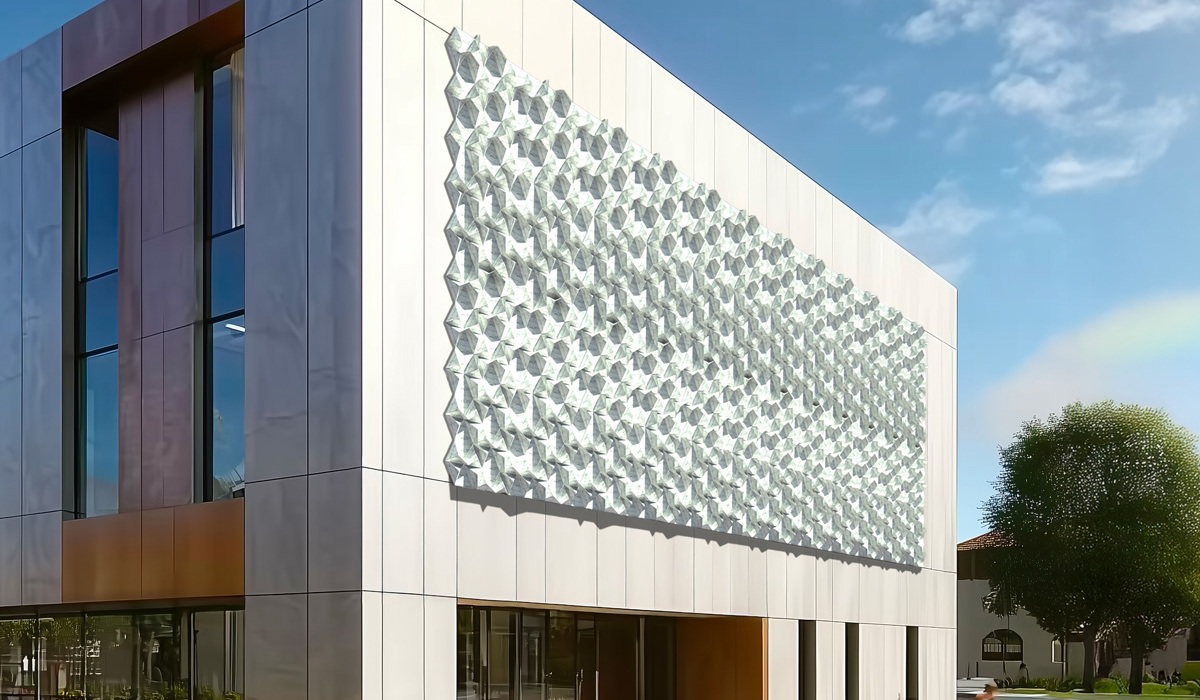
Tani Ori originates from the encounter between the art of origami and the materiality of marble—an oxymoron that merges lightness and solidity. The project takes shape thanks to lightened marble, enabling the creation of three-dimensional volumes while overcoming weight limitations.
The system uses a sandwich panel composed of natural marble, two aluminium skins and a polyethylene core, CNC-machined and folded into modules measuring 52 × 59.5 × 25 cm. The design recalls modular origami principles and optimises anchoring for ventilated façades.
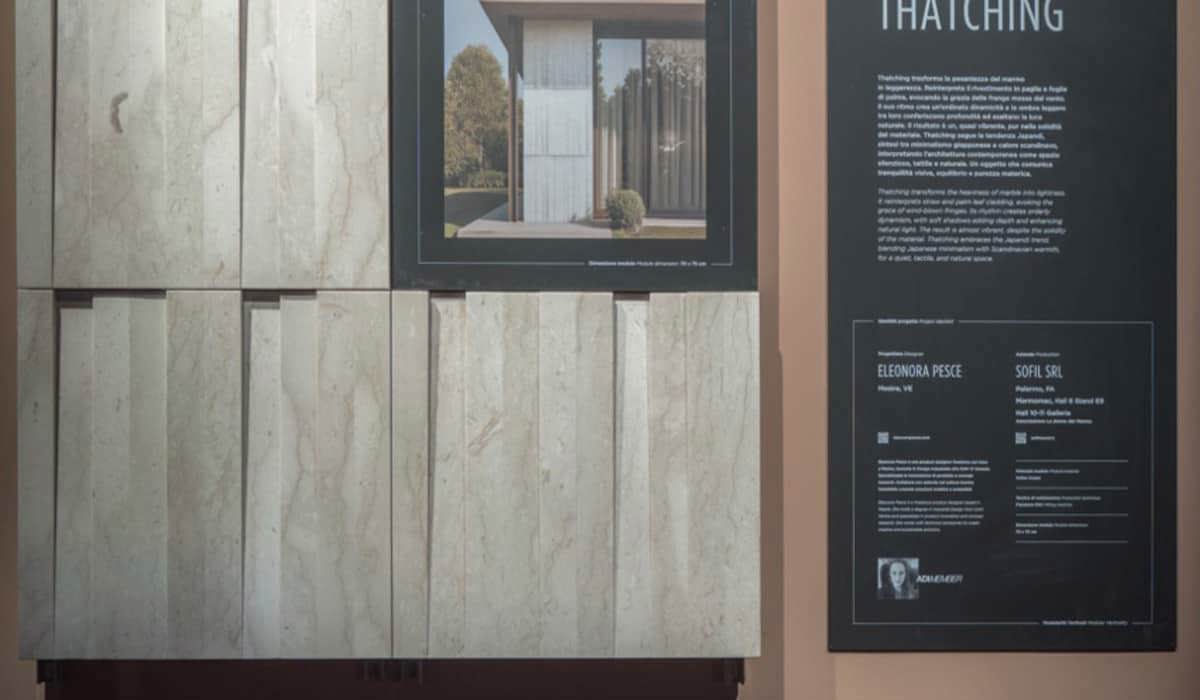
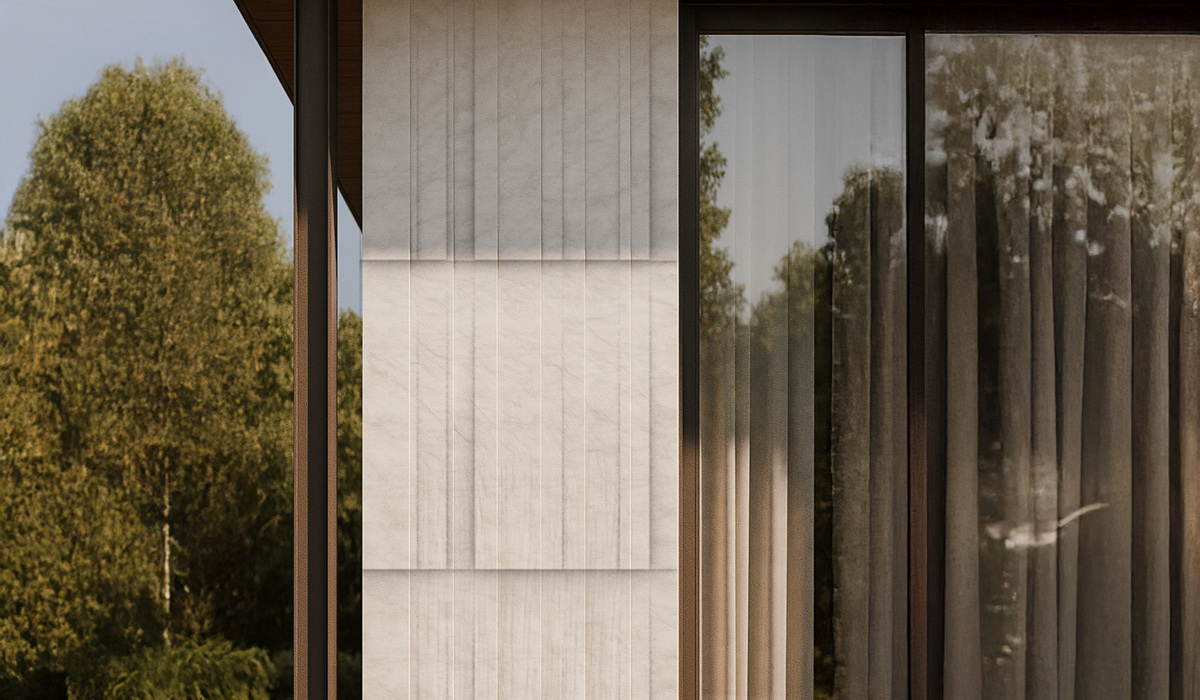
Thatching

Concavoconvesso
Designer
Maria Vittoria Malgarise
Production
Quintarelli Pietre e Marmi srl
Material
Verdello Trento Marble
Processing technique
Milling, Sanded and hand-trimmed
Measurements
70 x 70 cm
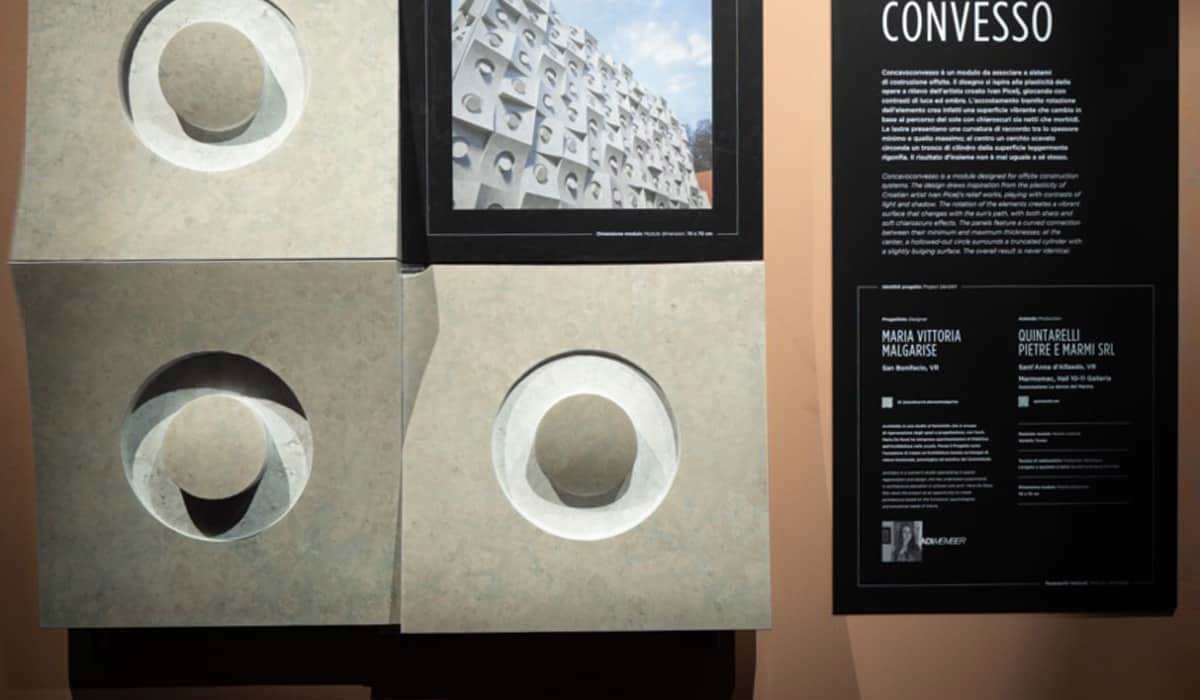
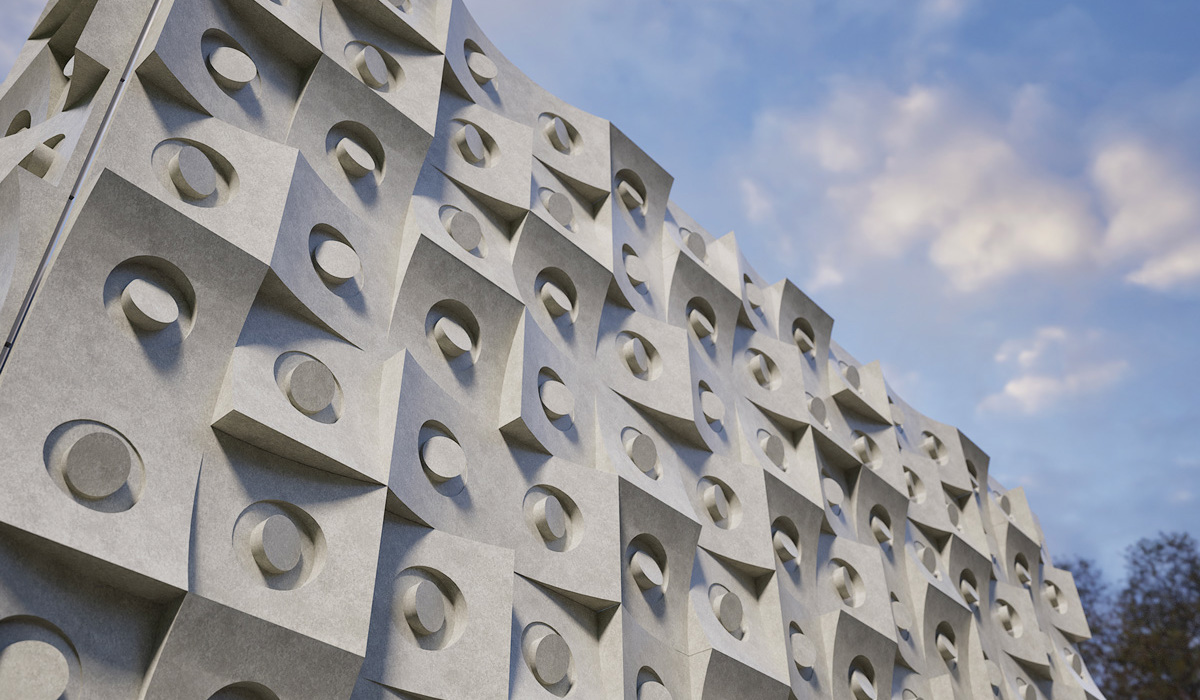
Concavoconvesso is a module designed for offsite construction systems. The design draws inspiration from the plasticity of Croatian artist Ivan Picelj’s relief works, playing with contrasts of light and shadow. The rotation of the elements creates a vibrant surface that changes with the sun’s path, with both sharp and soft chiaroscuro effects. The panels feature a curved connection between their minimum and maximum thicknesses; at the center, a hollowed-out circle surrounds a truncated cylinder with a slightly bulging surface. The overall result is never identical.

Käärme
Desginer
Paolo Criveller con Luca Mazzucco
Production
Travertini Paradiso
Material
Travertino
Processing technique
Saw cut / polishing
Measurements
70 x 70 cm
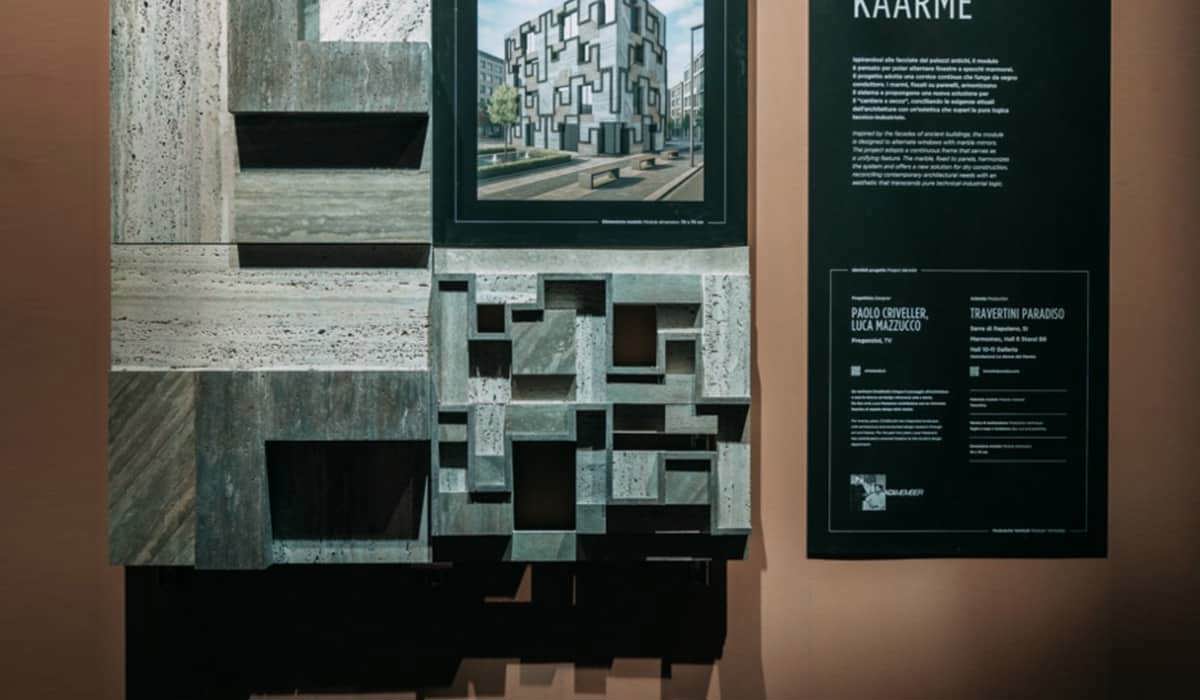
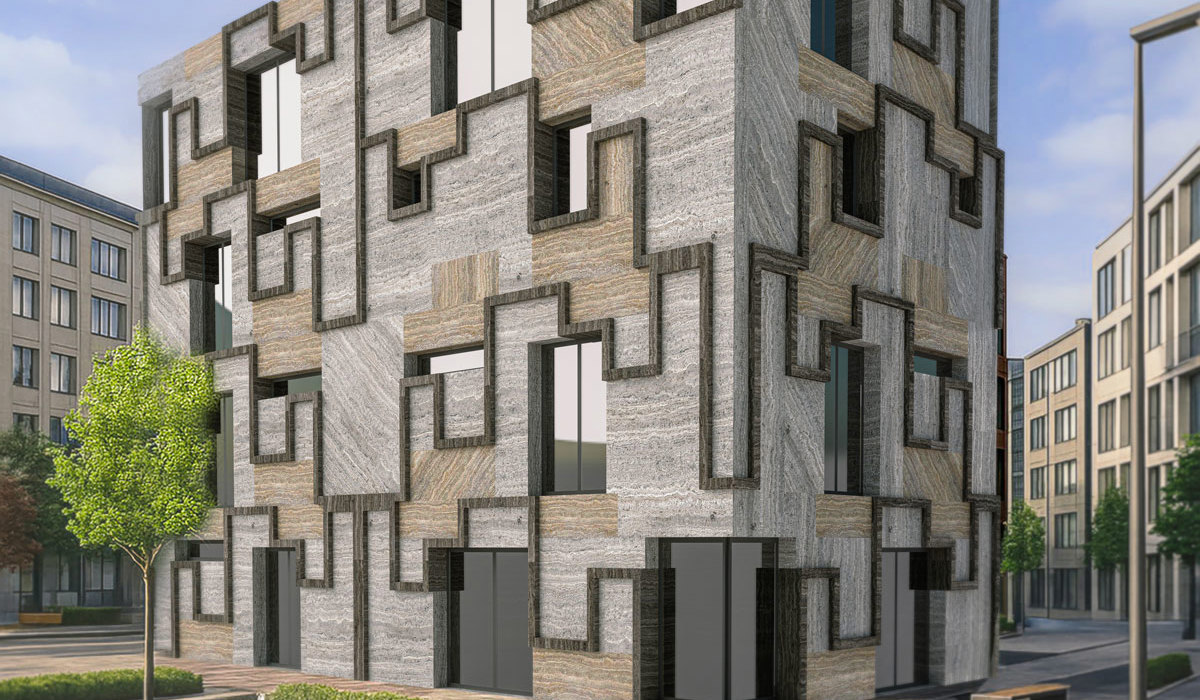
Inspired by the facades of ancient buildings, the module is designed to alternate windows with marble mirrors. The project adopts a continuous frame that serves as a unifying feature. The marble, fixed to panels, harmonizes the system and offers a new solution for dry construction, reconciling contemporary architectural needs with an aesthetic that transcends pure technical-industrial logic.

Eclipse
Designer
Gino Carollo Studio
Production
Marmi Scancella/S.I.M.G. S.R.L.
Technical Partner
Rondadesign
Material
Marmo di Orosei
Processing technique
Cutting, sanding, polishing, assembly and connection of lighting parts
Measurements
70 x 70 cm
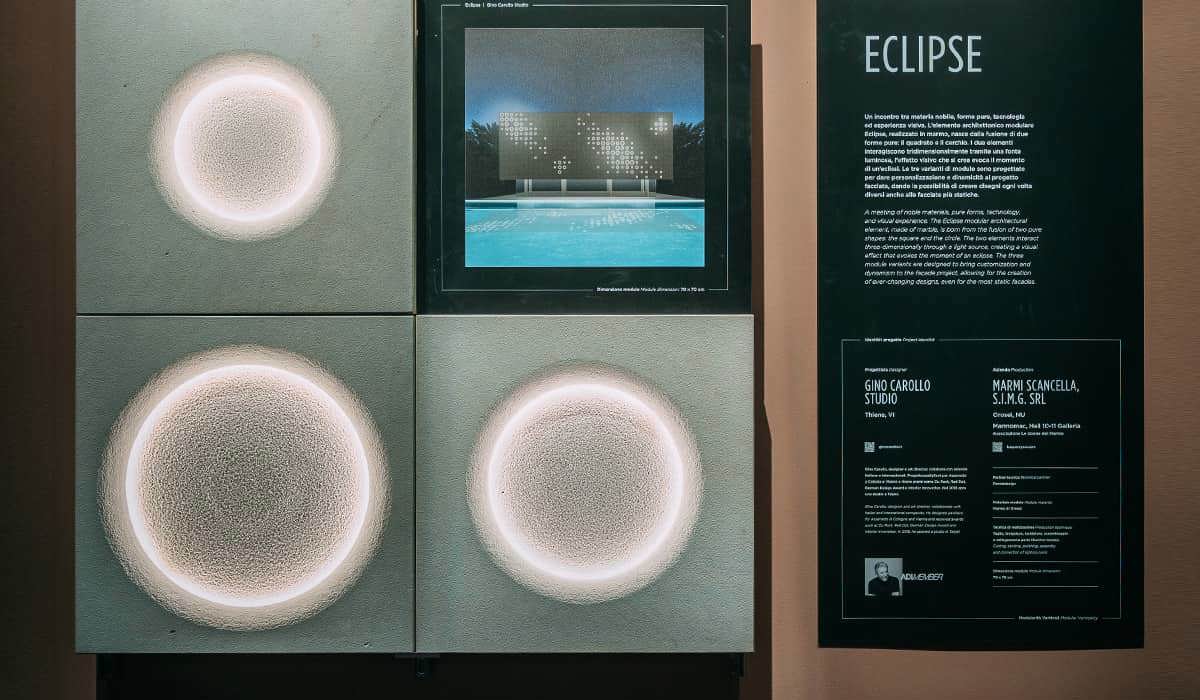
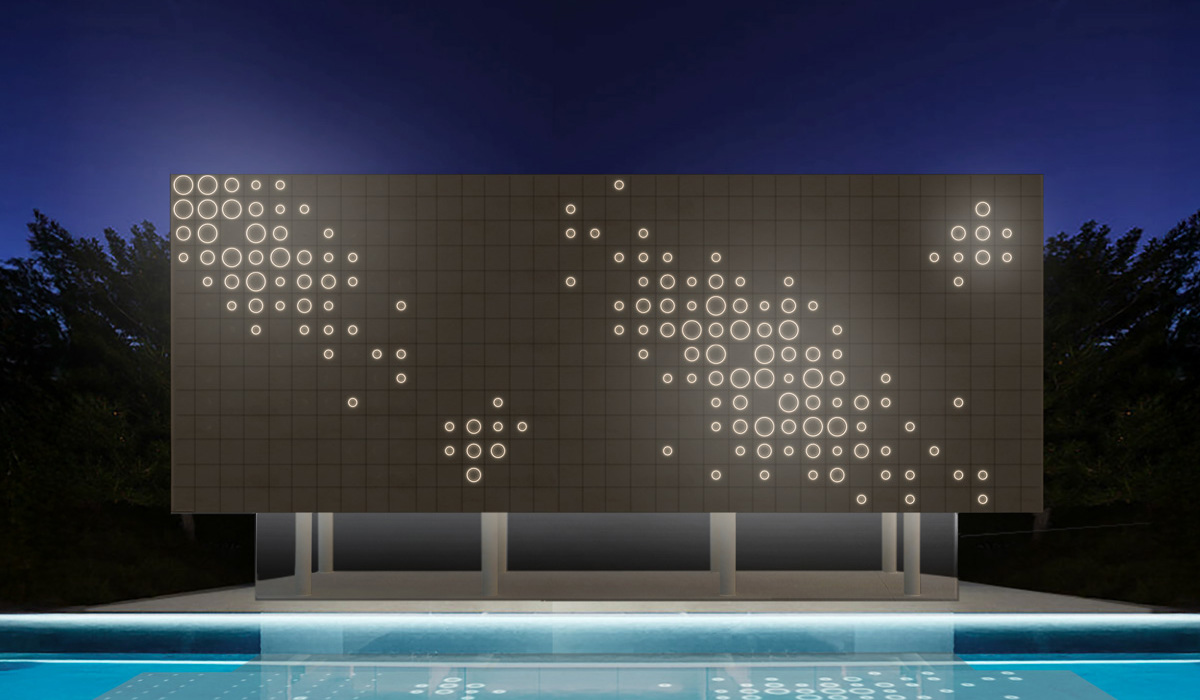
A meeting of noble materials, pure forms, technology, and visual experience. The Eclipse modular architectural element, made of marble, is born from the fusion of two pure shapes: the square and the circle. The two elements interact three-dimensionally through a light source, creating a visual effect that evokes the moment of an eclipse. The three module variants are designed to bring customization and dynamism to the façade project, allowing for the creation of ever-changing designs, even for the most static façades

Vea
Designer
Davide Cavaliere
Production
Agglotech
Material
Terrazzo Porfido verde
Processing technique
Milling machine
Measurements
70 x 70 cm
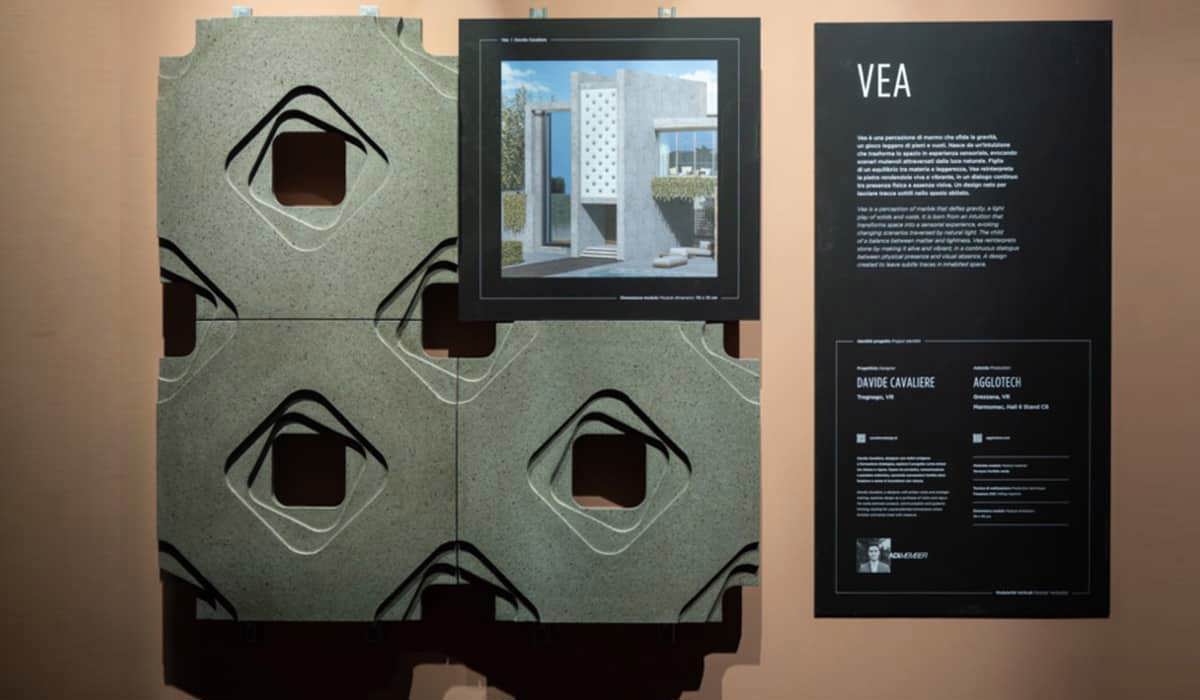
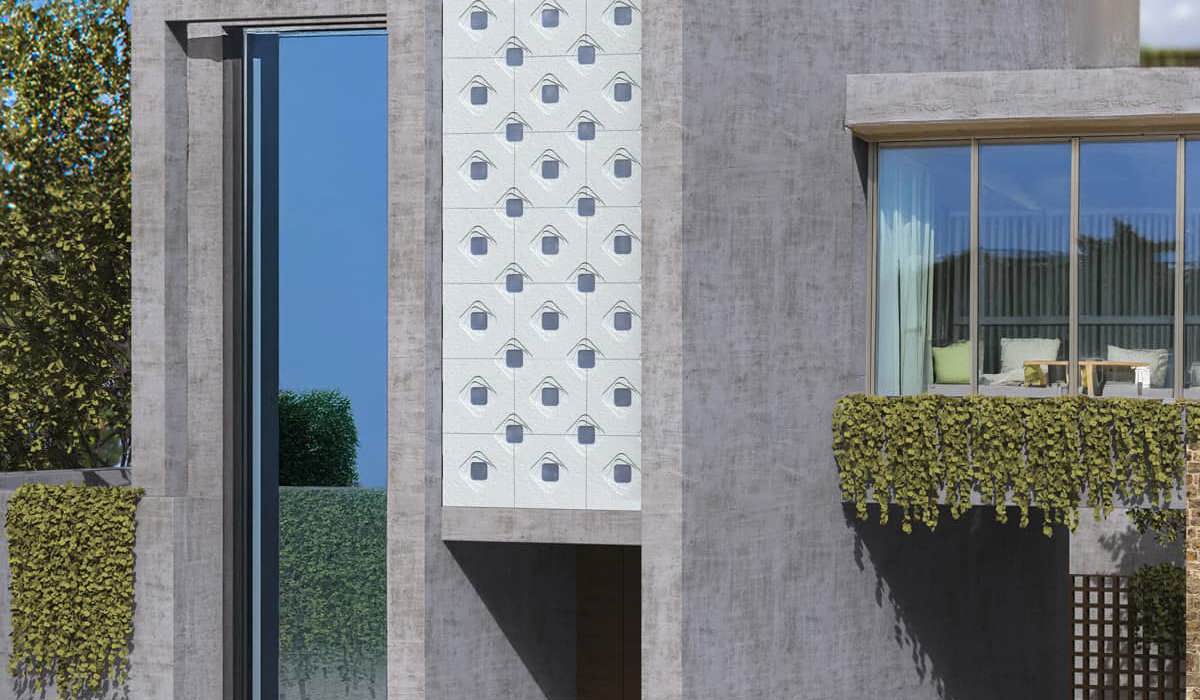
Vea is a perception of marble that defies gravity, a light play of solids and voids. It is born from an intuition that transforms space into a sensorial experience, evoking changing scenarios traversed by natural light. The child of a balance between matter and lightness, Vea reinterprets stone by making it alive and vibrant, in a continuous dialogue between physical presence and visual absence. A design created to leave subtle traces in inhabited space.

Calligrafie Ruderali
Designer
Maetherea/Cristina Morbi
Production
Essegi Marmi
Material
Breccia Pernice
Processing technique
Milling machine
Measurements
70 x 70 x 4 cm
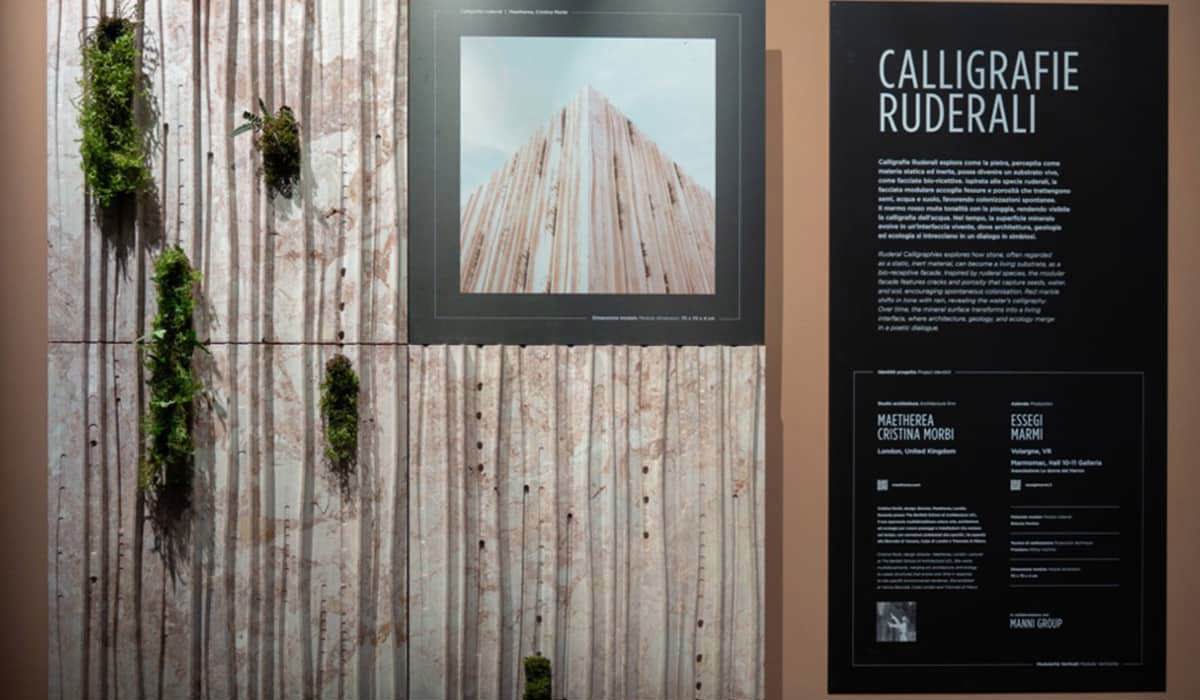
Ruderal Calligraphies explores how stone, often regarded as a static, inert material, can become a living substrate, as a bio-receptive facade. Inspired by ruderal species, the modular facade features cracks and porosity that capture seeds, water, and soil, encouraging spontaneous colonisation. Red marble shifts in tone with rain, revealing the water’s calligraphy. Over time, the mineral surface transforms into a living interface, where architecture, geology, and ecology merge in a poetic dialogue.

Embossed Marble
Designer
Maurizio Varratta / Studio Varratta Architects
Production
Di Biase Marmi
Material
Pietra di Apricena
Processing technique
Milling machine
Measurements
70 x 70 cm
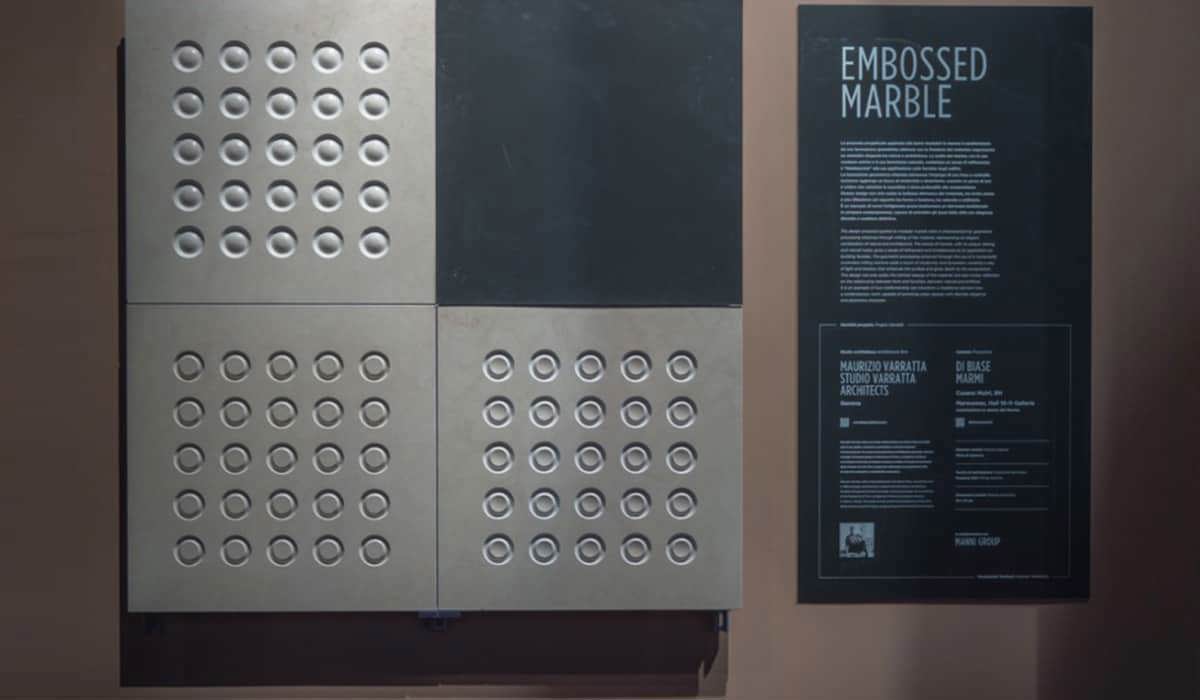
The proposal for modular marble slabs features geometric processing achieved through CNC milling, creating an elegant union between nature and architecture. Marble, with its unique veining and natural luster, imparts refinement and timelessness to building facades. The geometric processing adds modernity and dynamism, creating plays of light and shadow that enhance the surface and provide compositional depth. This design not only celebrates the material’s intrinsic beauty but also invites reflection on the relationship between form and function, natural and artificial. It exemplifies how craftsmanship can transform traditional elements into contemporary works, enriching urban spaces with understated elegance and distinctive character.

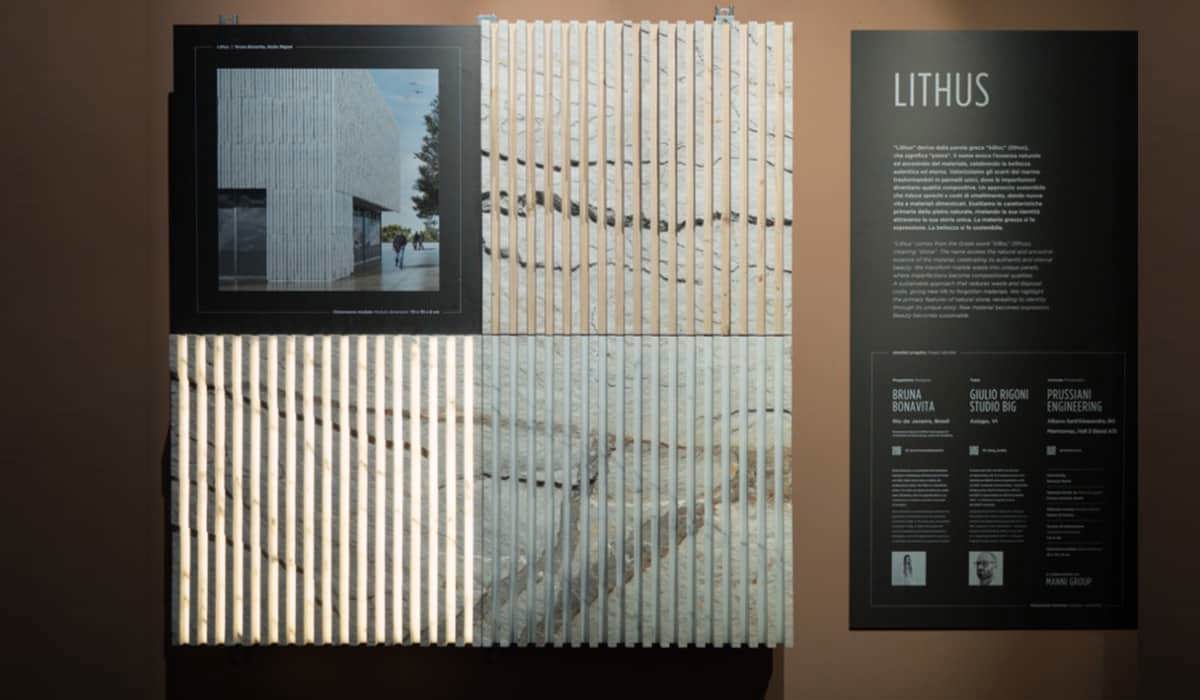
Lithus
Designer
Bruna Bonavita con Tutor Giulio Rigoni, Studio BIG
Production
Prussiani Engineering
Partnership
Remuzzi Marmi
Material Supplier
Franco Umberto Marmi
Material
Carrara Marble
Processing technique
Cut & Jet
Measurements
70 x 70 x 8 cm
“Lithus” comes from the Greek word “λίθος” (líthos), meaning “stone”. The name evokes the natural and ancestral essence of the material, celebrating its authentic and eternal beauty. We transform marble waste into unique panels, where imperfections become compositional qualities. A sustainable approach that reduces waste and disposal costs, giving new life to forgotten materials. We highlight the primary features of natural stone, revealing its identity through its unique story. Raw material becomes expression. Beauty becomes sustainable.


ADI DESIGN INDEX AND COMPASSO D’ORO
A world-renowned selection and award. ADI Design Index is the annual selection of the best design projects carried out by the Permanent Design Observatory, and includes products or product systems from every product category, theoreticalcritical research, process or corporate research, services, and social initiatives: all with particular attention to sustainability.
Each year, territorial commissions, reporting to the ADI territorial delegations, review Italian production to select the best products to be presented within a communication pathway that includes a yearbook, a dedicated website, and a series of exhibitions. Only products selected in the ADI Design Index can participate in the competition for the Compasso d’Oro award, the oldest and above all the most authoritative worldwide recognition in the design sector.
Established in 1954 from an idea by Gio Ponti, with the aim of highlighting the value and quality of Italian design products, the award is held biennially and relies on a jury of qualified experts in the design sector and the world of culture. During the Compasso d’Oro’s nearly 80 years of existence, 370 projects have been awarded, along with more than two thousand Honorable Mention recipients. This national heritage is now collected and preserved within the Historical Collection of the Compasso d’Oro Award, managed by the ADI Collezione Compasso d’Oro Foundation and currently on display at the ADI Design Museum in Milan.
ADI DESIGN INDEX 2011–2024 VIDEO by Nicola Facchin
The exhibition is complemented by a selection of stone products chosen over the past ten years from the ADI Design Index and the Compasso d’Oro, the internationally renowned award that represents excellence and stands as a symbol of Italian design, together with the ADI Index recognition connected to it.
A comprehensive overview where marble meets excellence, beauty, innovation and sustainability.
ADI – Veneto and Trentino Alto Adige Delegation
Founded in 1956, ADI brings together designers, companies, researchers, educators, critics and journalists around the themes of design: project, consumption, recycling and education. ADI plays a leading role in the development of industrial design as both a cultural and economic phenomenon.
Design is a system that connects production with users through research, innovation and engineering, creating functionality, social value and cultural meaning for goods and services distributed on the market.