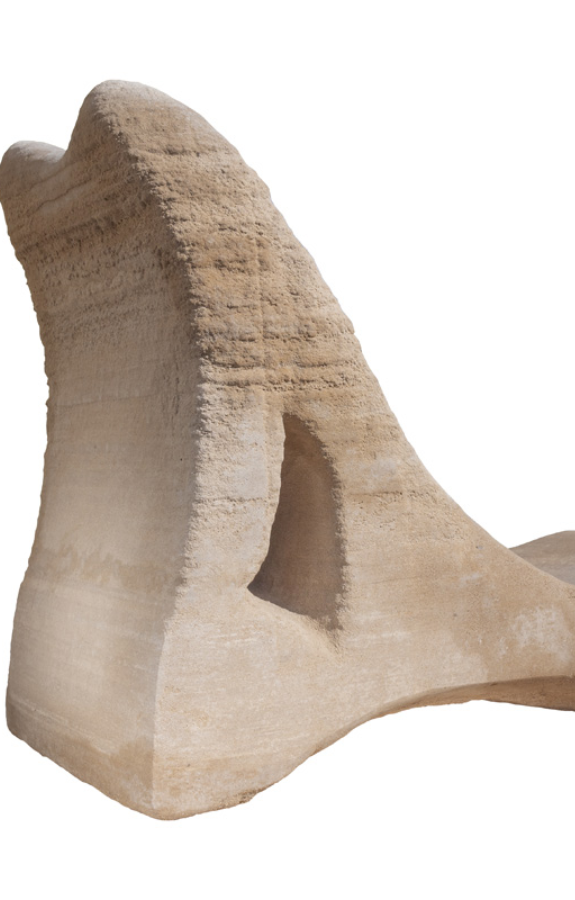
YOUNG STONE PROJECT
Time In Stone
YOUNG STONE PROJECT
Hall 11
Curated by: Raffaello Galiotto and Vincenzo Pavan
Lithic experimentation within universities.
A fundamental aspect in understanding stone materials and their application in design and architecture is the establishment of a strong relationship with universities, art academies and professional schools—institutions where advanced research and design experimentation are actively practised. This is the path Marmomac has been pursuing for over two decades, promoting and supporting the integration of stone-related content into the curricula of several prestigious Italian universities.
This commitment has recently led to the signing of collaboration agreements between Marmomac and major academic institutions for the activation of dedicated degree courses and master’s programmes focused on stone-related topics. A decisive contribution to this process has come from the collaboration with numerous Italian companies from the marble and machinery sectors, which have supported academic research with their expertise and know-how, enabling the realisation of student projects in prototype form.
Participating institutions
Bari —Politecnico di Bari
Rome — Sapienza University of Rome
Pescara — “G. D’Annunzio” University of Chieti–Pescara
Verona — Academy of Fine Arts of Verona
EDUCATIONAL EXPERIENCES ON THE THEME OF STEREOTOMY 2.0
Project Manager
GIUSEPPE FALLACARA E MAURIZIO BARBERIO
In collaboration with
STILMARMO WITH ATELIER ROMEO, CNC DESIGN, FABLAB POLIBA
Material
Apricena stone, Carrara marble, 3D printing with calcium carbonate
The exhibited prototypes represent selected outcomes of design experiments focused on innovating the language of stone products, taking into account the aesthetic and technical characteristics of the main quarry basins in Apulia. All prototypes were conceived and produced using digital CAD/CAM modelling and fabrication techniques.
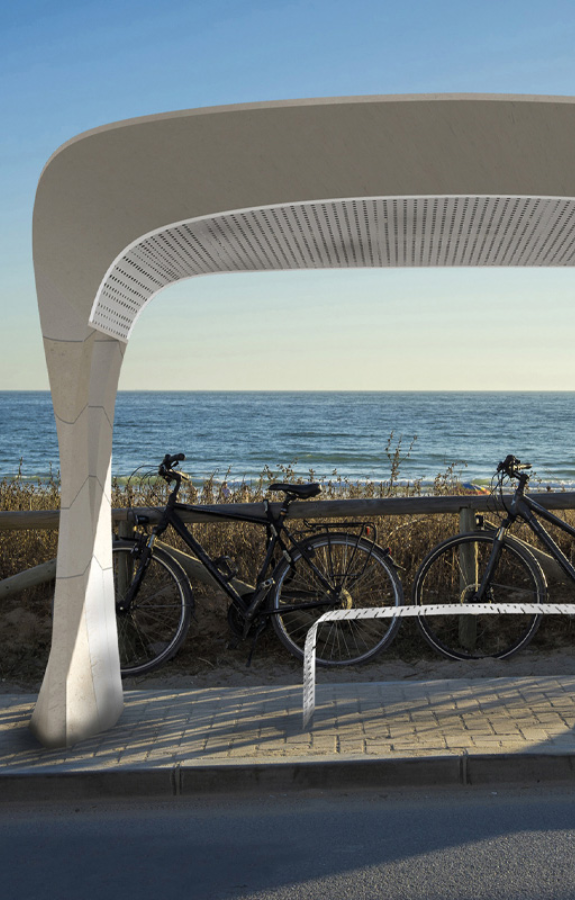
1. FLEUR DE VILLE
TUTOR
GIUSEPPE FALLACARA (PI), MARCO STIGLIANO, MAURIZIO BARBERIO
STUDENT
THEOPHILE DUQUENNE
PRODUCTION
ATELIER ROMEO, FABLAB POLIBA
MATERIAL
MARMO DI CARRARA
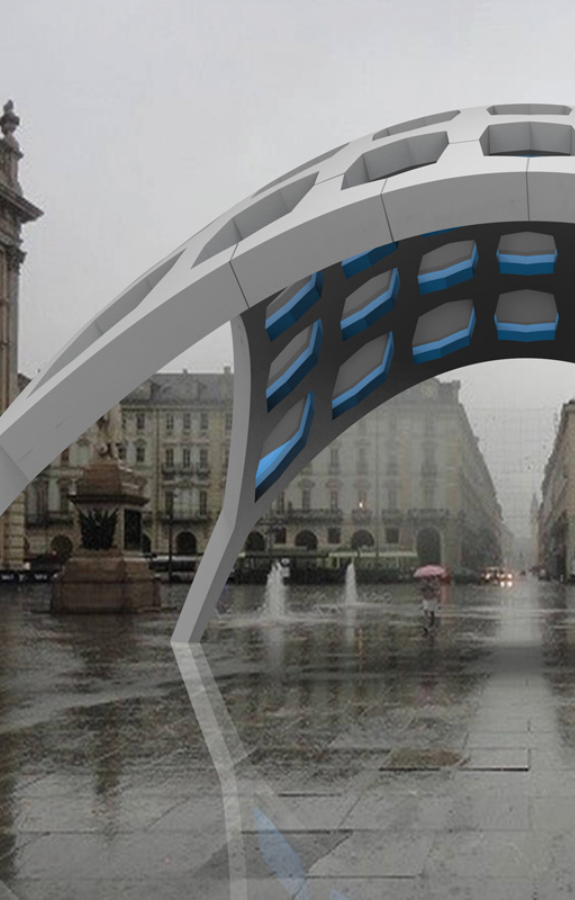
Fleur de Ville is a canopy project inspired by the organic forms of nature and built primarily in natural stone, with the aim of using local materials—such as Apricena stone—that are durable and preferably characterised by a low ecological footprint. The sinuous forms of the canopy reflect a conceptual vision that brings together material tradition and innovation in architectural morphology and construction techniques.
The core idea lies in the “lithification” of a floral form that provides visual wellbeing within the surrounding environment, as well as shelter and protection from the elements during moments of pause.
2. LUMINESCENT GEOMETRIC MARBLE
TUTOR
GIUSEPPE FALLACARA (PI), MAURIZIO BARBERIO
STUDENT
SIMON CANNONE
PRODUCTION
ATELIER ROMEO, FABLAB POLIBA
MATERIAL
Carrara marble
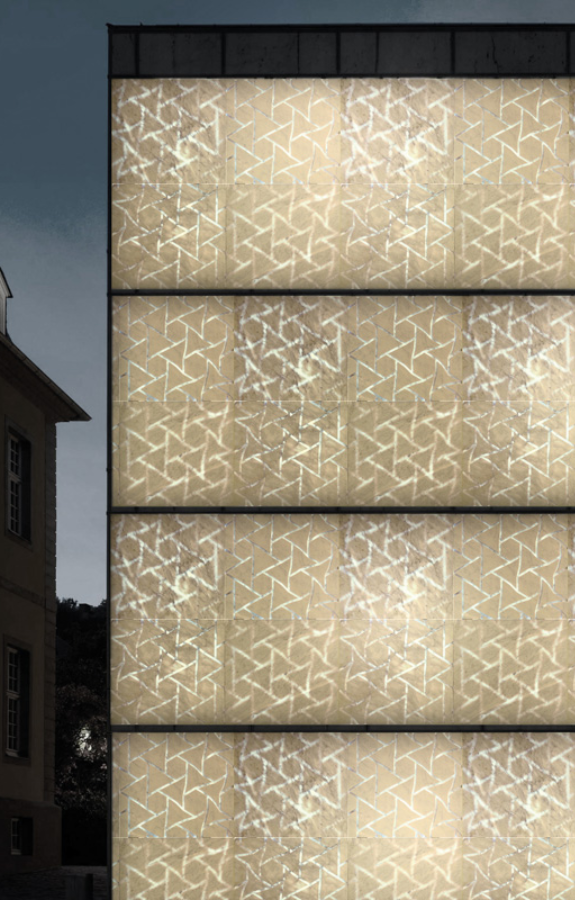
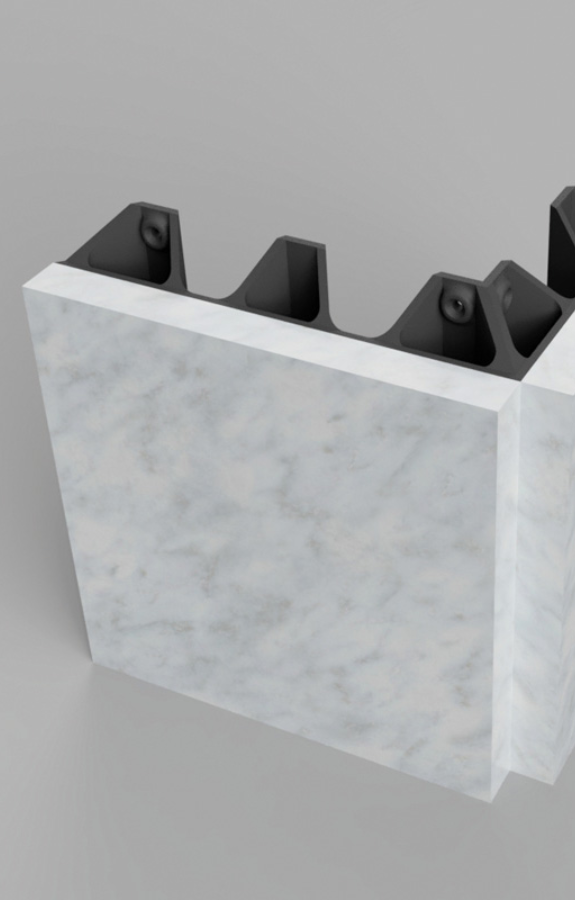
The project proposes the use of carved marble slabs featuring a parametric pattern that reduces the stone thickness and allows light to pass through via an integrated LED lighting system. The system can be applied to building façades as well as interior partitions.
The carving may be exposed on the visible façade, or concealed on the inner side and revealed only when the marble is backlit. Both slab dimensions and geometric patterns are fully customisable.
3. TRIVAULT
TUTOR
GIUSEPPE FALLACARA (PI), MAURIZIO BARBERIO
STUDENT
LOÏC LAFOSSE
PRODUCTION
RECCHIA MARMI, CNC DESIGN, FABLAB POLIBA
MATERIAL
Apricena stone
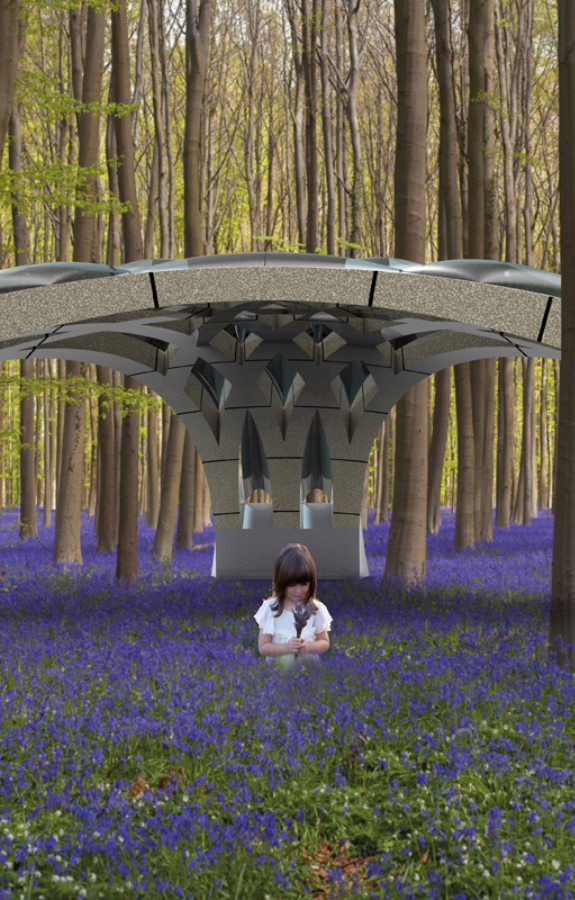
The project proposes a perforated roofing system composed of intersecting load-bearing stone arches. Developed on a triangular plan, the openings between the arches are infilled with translucent ETFE (ethylene tetrafluoroethylene) cushions.
The design of a perforated roof and the combination of heavy and lightweight materials exemplify the new frontiers that stone can explore within the framework of Stereotomy 2.0.
4. ADDVAULT — DIGITAL FABRICATION FOR VAULTED STRUCTURES
DESIGN
AMEDEO MANUELLO, GIUSEPPE CARLO MARANO with FEDERICO RIBERI, GIUSEPPE FALLACARA
MATERIAL
Polylactic acid (PLA), cement, compact limestone
This research explores perforated vaulted structures. The presentation at Marmomac of the work developed at MastrLAB (Politecnico di Torino) represents the first step towards the construction of vaulted structures using stone modules fabricated through numerically controlled construction technologies.
The physical model was produced using additive manufacturing (Fused Deposition Modelling) to create mini formworks in recyclable material (PLA). Each element was designed in terms of geometry and volume to optimise assembly and structural resistance. The long-term objective is to fabricate the components directly from stone blocks, resulting in a perforated stone dome generated through additive and automated processes.
DIGITALSTONE MORPHING & PROCESSING
PROJECT MANAGER AND PRINCIPAL INVESTIGATOR
MARCO FERRERO
LAB TEACHER / RESEARCHER
FEDERICA ROSSO, ELIO RAVÀ, ADRIANA CIARDIELLO
SCIENTIFIC PARTNER
University of Granada, E.T.S. de Ingeniería de Edificación
Interuniversity Research Centre on Pollution and Environment – University of Perugia
PRODUCTION
BALDUCCI MARMI WITH FILOALFA BY CICERI DE MONDEL, MIND3D PRINTING
Advanced methods and techniques for the design and production of stone construction elements. The exhibited prototypes were developed within the Architectural Design and Stone Technology laboratory, focusing on construction elements capable of delivering high performance while maintaining a balanced relationship between architectural language and construction technique.
BREATHING STONE
STUDENT
MICHELE PASCUCCI, GIULIA BULF, FLAVIA DELLA TORRE, MATTEO TERZANI
PRODUCTION
BALDUCCI MARMI WITH FILOALFA BY CICERI DE MONDEL, MIND3D PRINTING
Conceived as an evolution of traditional lightweight marble composite panels, Breathing Stone exploits the advantages of 3D printing to create a highly sustainable and adaptable construction element. The panel forms a ventilated façade system that integrates stone finishes with the energy performance of the supporting structure.
The backing material is recycled and recyclable, highly resistant to mechanical stress and weathering.
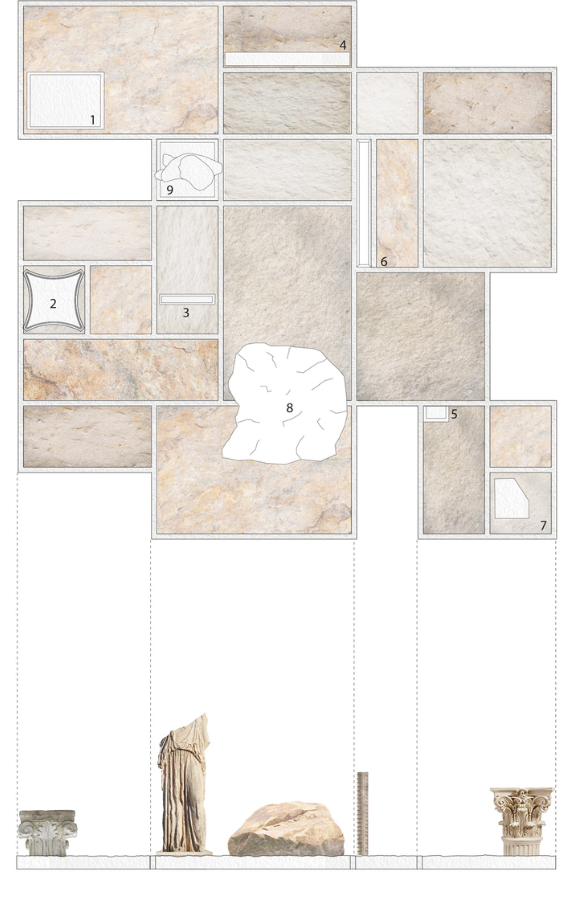
THE GARDEN OF TIME, BETWEEN OBLIVION AND ETERNITY
PROJECT MANAGER
DOMENICO POTENZA WITH GIULIO GIRASANTE AND FRANCESCA BUX
PRODUCTION
HELIOS AUTOMAZIONI WITH FELICE CHIRÒ INDUSTRIA MARMI
MATERIAL
Naturally split Apricena stone
ARCADIA
PROJECT MANAGER
SOTIRIOS PAPADOPOULOS WITH KATIA GASPARINI, LORENZO PALMERI, FRANCESCA PICCOLINO BONIFORTI
STUDENT
FRANCESCO LASALA, LORENZO FAVARON WITH ALAA ABDALHAMEED
PRODUCTION
SCUOLA TECNICA DEL MARMO – SETTORE ARTE E AUTOMAZIONE – SANT’AMBROGIO DI VALPOLICELLA
MATERIAL
Grassi 1880 quarries
Produced in two versions—one using subtractive technologies and the other additive ones—ARCADIA is a furniture project for private gardens and public parks composed of seven self-supporting, modular elements. It proposes a model of re-urbanisation that celebrates a sustainable relationship between human beings and their time, with nature—increasingly compromised by intrusive lifestyles—serving as its most profound expression.